Schema Markup for AI Visibility: What Actually Works in 2026
Learn which schema types help your content get cited by AI engines in 2026. A practical guide with JSON-LD examples, an audit checklist, and data on what works

Sixty-five percent of pages cited by Google's AI Mode include structured data. For ChatGPT, the number is 71%. Those two numbers explain why schema markup went from an SEO nice-to-have to the technical foundation of AI visibility in less than a year.
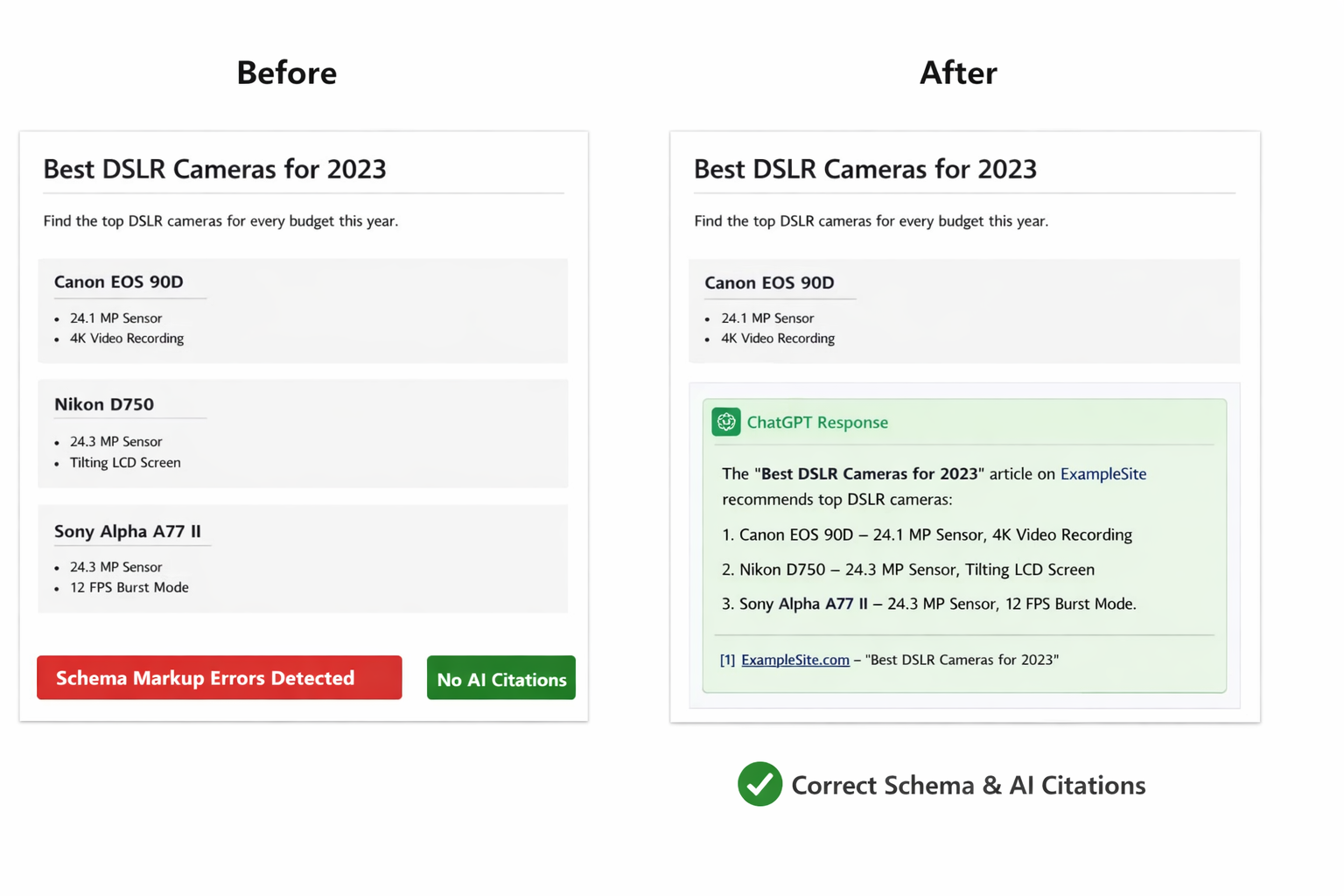
But there's a catch. Google deprecated FAQ schema in January 2026 and HowTo schema in February. The March 2026 core update reshuffled how structured data influences rankings and AI citations. And a controlled experiment published on Search Engine Land found that only pages with well-implemented schema appeared in AI Overviews, while pages with sloppy markup got nothing despite ranking for more keywords.
Schema still works. Badly done schema doesn't. This guide covers which types actually matter for AI visibility right now, how each major AI platform uses structured data, and how to audit and implement it without wasting time on deprecated features.
Why Schema Matters More for AI Than It Did for Traditional SEO
Traditional SEO used schema primarily to trigger rich results: star ratings, recipe cards, FAQ dropdowns. Those visual enhancements were useful but optional. A page could rank perfectly well without any structured data.
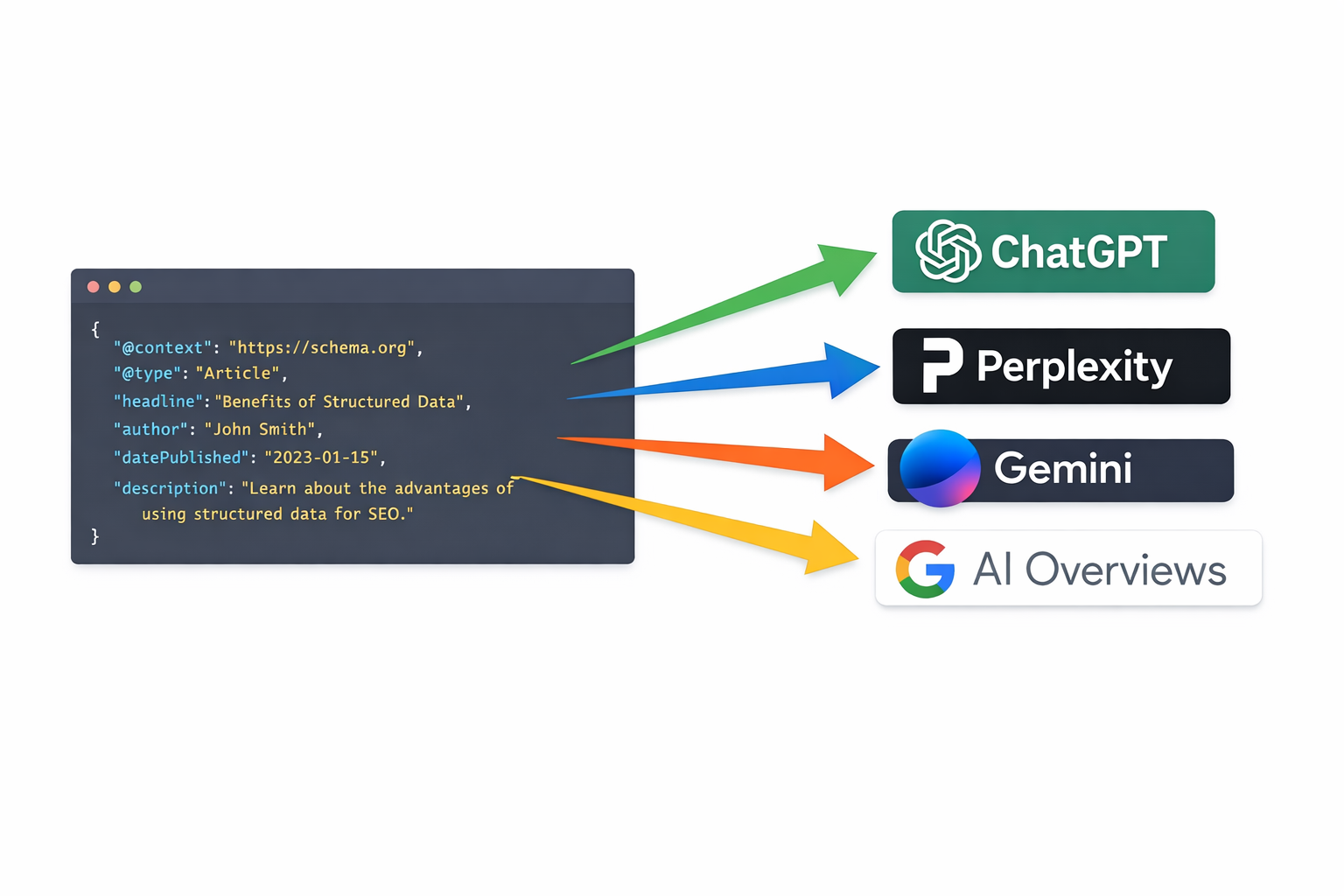
AI search works differently. When ChatGPT, Perplexity, or Google's AI Mode generate an answer, they need to understand what a page is about, who published it, how current the information is, and whether the source is credible. They can infer some of this from plain text. But structured data removes ambiguity.
Think of it this way: a page mentioning "Apple" could be about the company, the fruit, Apple Music, or Apple TV. Organization schema with a sameAs property linking to the company's Wikipedia page and official social profiles tells AI systems exactly which entity the page is about. Without that signal, the AI has to guess, and it often moves on to a source that makes the answer easier.
Both Google and Microsoft confirmed in March 2025 that they use schema markup for their generative AI features. ChatGPT followed by confirming structured data influences which products appear in its responses. This isn't speculation about future use. It's confirmed infrastructure.
The role of schema has shifted from "display trigger" to "trust signal." AI systems use it to verify facts, resolve entities, and assess whether your content is credible enough to cite. That's a fundamentally different value proposition than getting a star rating in search results.
What Changed in Early 2026
Three updates reshaped the schema landscape:
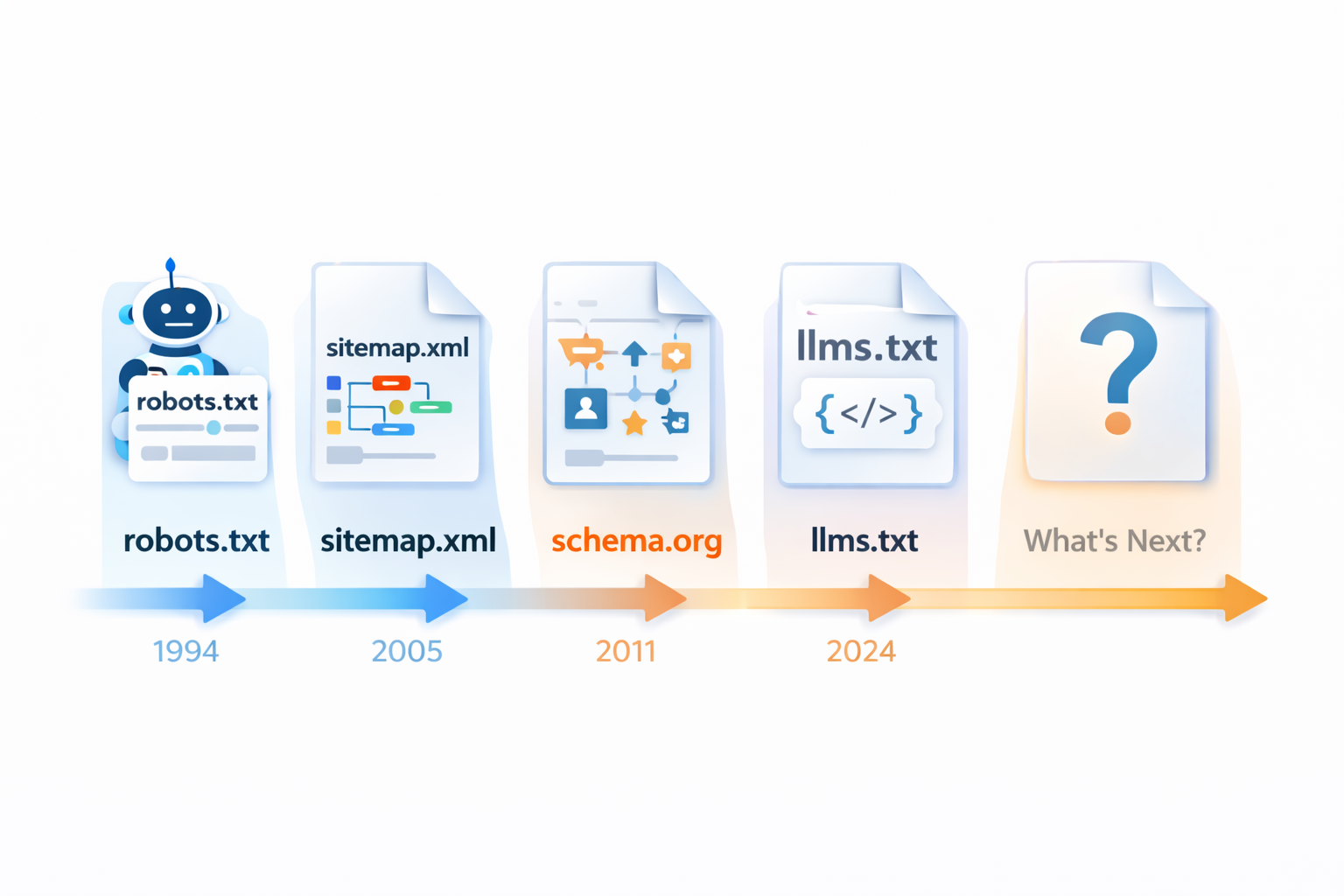
Google deprecated FAQ and HowTo rich results. FAQ schema stopped triggering rich results in January 2026. HowTo followed in February. This caused confusion, with some teams stripping the markup entirely. That's a mistake. Google's documentation clarified that AI systems still process this data even without the visual SERP feature. The schema still helps AI understand your content structure. It just doesn't produce a dropdown in search results anymore. (This is similar to how llms.txt works: a signal that helps AI crawlers process your site, even though the visible impact isn't always immediate.)
The March 2026 core update shifted schema's role. Review schema on editorial comparison posts was demoted at scale. But pages with clean, accurate entity schema saw improved citation rates in Google's AI Mode. The update punished inflated or mismatched schema and rewarded markup that genuinely described what was on the page.
The knowsAbout property gained influence. After March 2026, Organization and Person schema with knowsAbout declarations became more impactful. Specifying the topics your organization has genuine expertise in helps AI Mode select your content for queries in those domains. An organization schema declaring expertise in "content marketing" and "AI search optimization" is more likely to be cited for those topics than one with no topic declarations.
The overall direction is clear: AI systems reward schema that's accurate, specific, and entity-focused. They ignore or penalize schema that's inflated, outdated, or disconnected from the visible content.
The Four Schema Types That Drive AI Citations
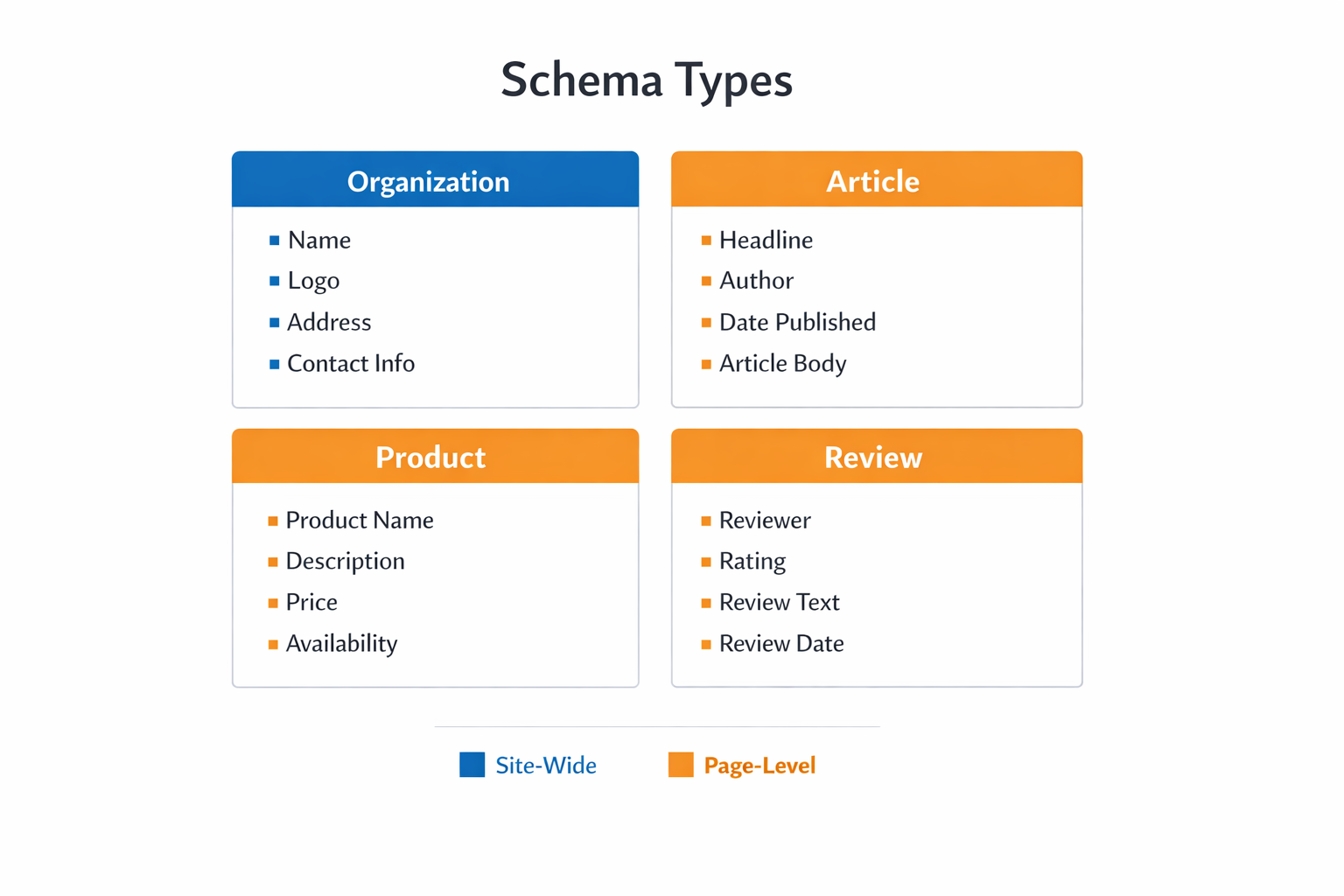
After the deprecations, four core schema types carry the most weight for AI visibility. Everything else is optional or situational.
Organization Schema
This is the foundation. Organization schema establishes your brand as a recognizable entity in knowledge graphs across all platforms. Every page on your site should include it.
What to include beyond the basics: name, url, logo, description, sameAs (linking to your Wikipedia page, LinkedIn, social profiles), contactPoint, foundingDate, areaServed, and the newly important knowsAbout property.
The sameAs links are critical. They're how AI systems connect your website to the broader knowledge graph. If your company has a Wikipedia page, a Wikidata entry, or verified profiles on LinkedIn and Crunchbase, linking those in sameAs gives AI systems the entity confirmation they need to trust your content.
Sites with comprehensive Organization schema are cited more frequently because AI engines can confidently attribute information to a verified entity rather than an anonymous source.
Article / BlogPosting Schema
Article schema tells AI systems what type of content a page contains, who wrote it, when it was published, and when it was last updated. This classification helps AI match your page to query intent during source selection.
The most important property most teams neglect: dateModified. AI engines use this heavily for recency signals. If you update a post but don't update dateModified, the AI still treats your content as stale. One practitioner reported that forgetting to update this single field caused AI engines to keep citing outdated information from a client's page for weeks.
Include author with a linked Person schema (not just a name string), publisher referencing your Organization schema, headline, description, datePublished, and dateModified. Use the @id property to connect the Article schema to your Organization and Person entities.
Product Schema
For any business selling products or services, Product schema tells AI systems exactly what you offer: name, description, brand, SKU, price, availability, and customer ratings. ChatGPT's shopping features and AI shopping agents rely heavily on this data when making recommendations.
Pages with complete Product schema (including price, rating, and availability) see a 74.1% CTR lift in traditional search. In AI search, the impact is even more direct: if an AI agent can't verify your price or availability through structured data, it won't risk recommending you.
Include offers with price, priceCurrency, and availability. Add aggregateRating if you have reviews. Specify brand, sku, and gtin for product disambiguation. The more complete and accurate your Product schema, the more confidently AI systems can recommend your products.
Review / AggregateRating Schema
Customer reviews and ratings remain powerful trust signals for AI systems. When an AI needs to recommend "the best" option in a category, it looks for aggregated review data to support its recommendation.
After March 2026, the key rule is that Review schema must appear on product or service pages, not on editorial comparison articles. Google actively demoted editorial pages using Review schema to inflate their appearance. Keep Review and AggregateRating on pages where real customer reviews exist.
How Each AI Platform Uses Schema
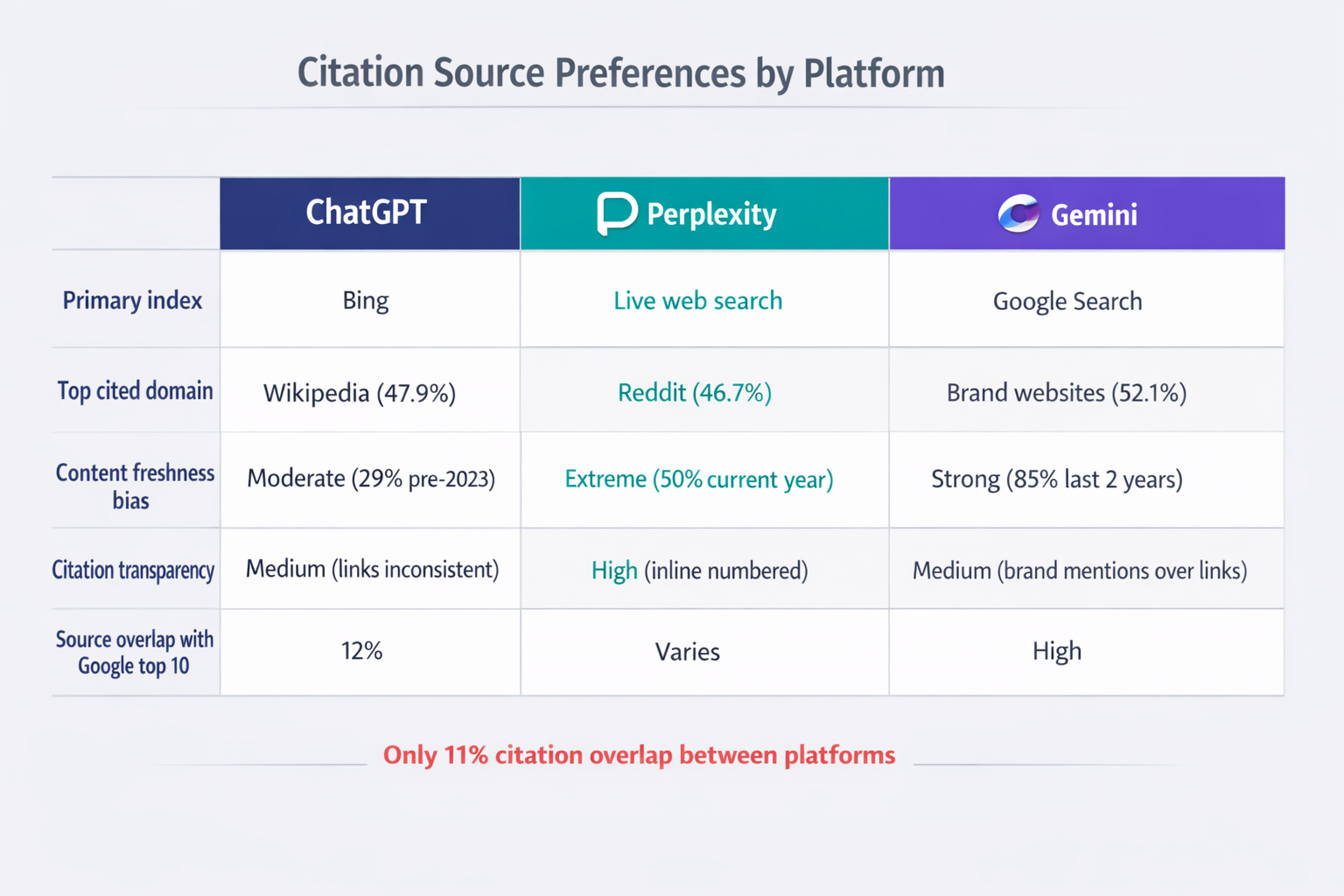
Not every AI engine processes structured data the same way. Understanding the differences helps you prioritize.
Google AI Overviews and AI Mode have the most direct relationship with schema. Google confirmed structured data is "critical for modern search features." AI Mode source selection considers schema quality alongside PageRank, freshness, and content signals. Well-implemented schema with clean entity resolution leads to higher trust scores.
ChatGPT processes structured data when its browsing mode retrieves web content. When ChatGPT accesses a page with Organization or Article schema, it extracts entity details from the structured properties. For product recommendations, ChatGPT checks Product schema for pricing, availability, and ratings before including a brand in shopping responses.
Perplexity crawls the web directly and uses schema to disambiguate sources. When multiple pages discuss similar topics, Perplexity uses Organization and Article schema to determine which source is the most authoritative original publisher rather than an aggregator.
Claude processes page content similarly but puts more weight on the quality and depth of the visible text. Schema serves as a supplementary trust signal rather than a primary ranking factor.
The practical takeaway: implement schema once in JSON-LD format, and it works across all platforms. You don't need platform-specific implementations. But the payoff varies: Google AI Mode and ChatGPT show the strongest response to structured data quality.
A Practical Schema Audit Checklist
Before adding new schema, audit what you already have. Many sites have broken, outdated, or mismatched markup that actively hurts rather than helps.
Week 1: Assess what you have
Run your top 20 pages through Google's Rich Results Test. Check for validation errors, missing required fields, and warnings. Look at Google Search Console's Enhancements section for site-wide schema errors. Note which pages have schema and which don't.
Week 2: Fix accuracy issues
Compare your schema claims to visible page content. Does your dateModified match when you actually last updated the content? Does your author reference a real person with a bio on your site? Does your Product price match the actual price on the page? Mismatches between schema and visible content are a quiet citation killer. AI systems cross-check this, and inconsistencies reduce trust.
Week 3: Implement core schema
Add Organization schema site-wide if you don't have it. Add Article/BlogPosting schema to every content page. Add Product schema to product and service pages. Use JSON-LD in the <head> section of each page. Connect entities using the @id property so your Organization, Person, and Article schemas reference each other.
Week 4: Monitor and iterate
Schema effects on AI visibility typically take 2 to 4 weeks to manifest as AI systems re-crawl your content. Track changes in AI citation frequency using RepuAI to see whether your brand mentions increase across ChatGPT, Perplexity, Gemini, and Claude after implementation. Compare your AI visibility scores before and after using the free AI Visibility Checker. In Search Console, watch for changes in rich result impressions and any new schema errors.
Common Mistakes That Kill AI Citations
Implementing schema once and never updating it. The dateModified property matters enormously for AI recency signals. Every time you update content, update dateModified. Set a quarterly audit cadence at minimum.
Schema that contradicts visible content. If your schema says "Updated March 2026" but the visible page still shows 2024 data, AI systems notice. Automated systems that pull schema from the same data source as your page content prevent this drift.
Stacking too many schema types on one page. Piling Article + FAQ + HowTo + Product schema on a single page creates noise. Use the primary schema type that matches the page's main purpose. An article page gets Article schema. A product page gets Product schema. Don't try to make one page serve every schema purpose.
Using generic author values. A schema author field that says "Admin" or "Staff Writer" provides zero trust signal. Link to a Person schema with a real name, bio, credentials, and sameAs properties pointing to the author's LinkedIn or professional profiles. AI systems weight content from identifiable experts more than anonymous sources.
Ignoring sameAs for entity resolution. Without sameAs links, AI systems can't confidently connect your website to your presence in the broader knowledge graph. This single property is the difference between being a verified entity and an unknown domain.
JSON-LD Is the Only Format Worth Using
Three structured data formats exist: Microdata, RDFa, and JSON-LD. Use JSON-LD. It's the format Google officially recommends, and every major AI engine processes it most reliably.
JSON-LD sits in a separate <script> block in your page's <head>, cleanly separated from your HTML. This matters because AI crawlers can parse it without interference from page layout or dynamic content. Microdata and RDFa embed schema inside HTML elements, which creates parsing conflicts and makes updates harder.
If you're using a CMS like WordPress, plugins like Yoast SEO or Rank Math generate basic JSON-LD automatically. For more sophisticated implementations, custom JSON-LD in your template header gives you full control. The key requirement: the markup must match the actual content on the page. No exceptions.
Where Schema Fits in Your Broader AI Strategy
Schema alone won't make you visible to AI engines. A controlled study found no correlation between schema coverage and citation rates when other factors like content quality and topical authority weren't controlled for. Schema is a necessary technical foundation, but it works best when combined with the content strategies covered in RepuAI's guide to what type of content gets cited by AI and the optimization framework in the GEO practical guide.
Think of it in layers. The technical layer (schema, crawlability, rendering) makes your content accessible to AI. The content layer (structure, clarity, original data, expert attribution) makes it worth citing. The authority layer (backlinks, third-party mentions, brand signals) makes it trustworthy. Schema covers the first layer. You still need the other two.
If you've already worked through the SEO vs AEO vs GEO framework, schema sits squarely in the overlap zone where all three disciplines benefit. Proper structured data helps you rank (SEO), get selected as the direct answer (AEO), and earn AI citations (GEO) simultaneously.
For brands just getting started: implement Organization and Article schema site-wide this week. Add Product schema to your key commercial pages. Set a calendar reminder to update dateModified every time you refresh content. Then start tracking whether your AI citation rates improve. The data will tell you where to go next.