llms.txt Explained: Facts, Myths, and Whether Your Site Needs It
What is llms.txt, does it actually boost AI visibility, and should you implement it? A balanced guide with data from 300,000 domains and expert opinions.
SEMrush flags your missing /llms.txt as a problem. Rank Math offers to generate one automatically. Yoast just shipped native support. Your competitor's site has one. You don't. Should you panic?
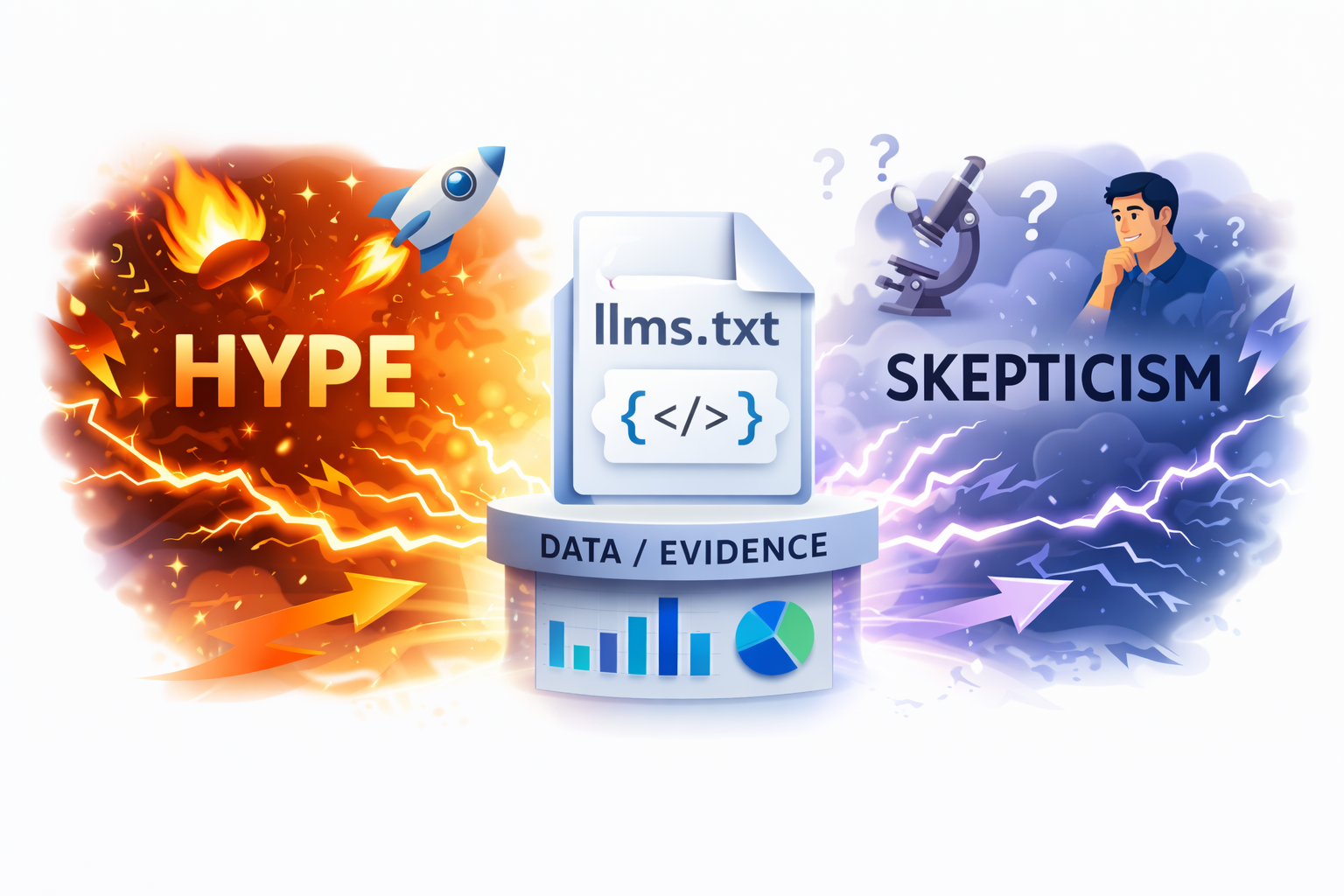
Probably not. But the answer isn't as simple as the loudest voices in the SEO community suggest. The llms.txt file sits at the center of one of the most polarizing debates in AI search optimization right now, and the truth is messier than either side admits.
What Is llms.txt, Actually?
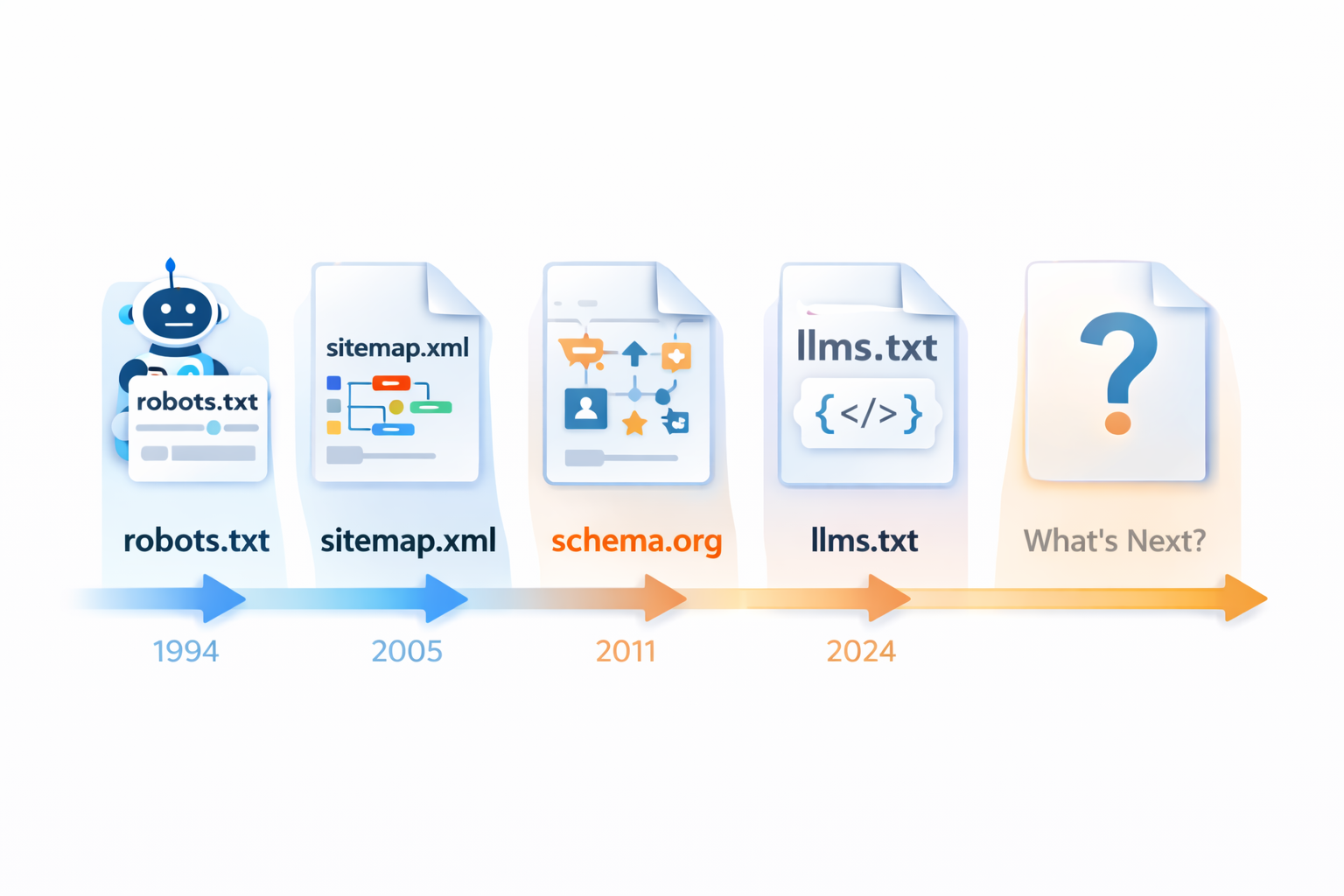
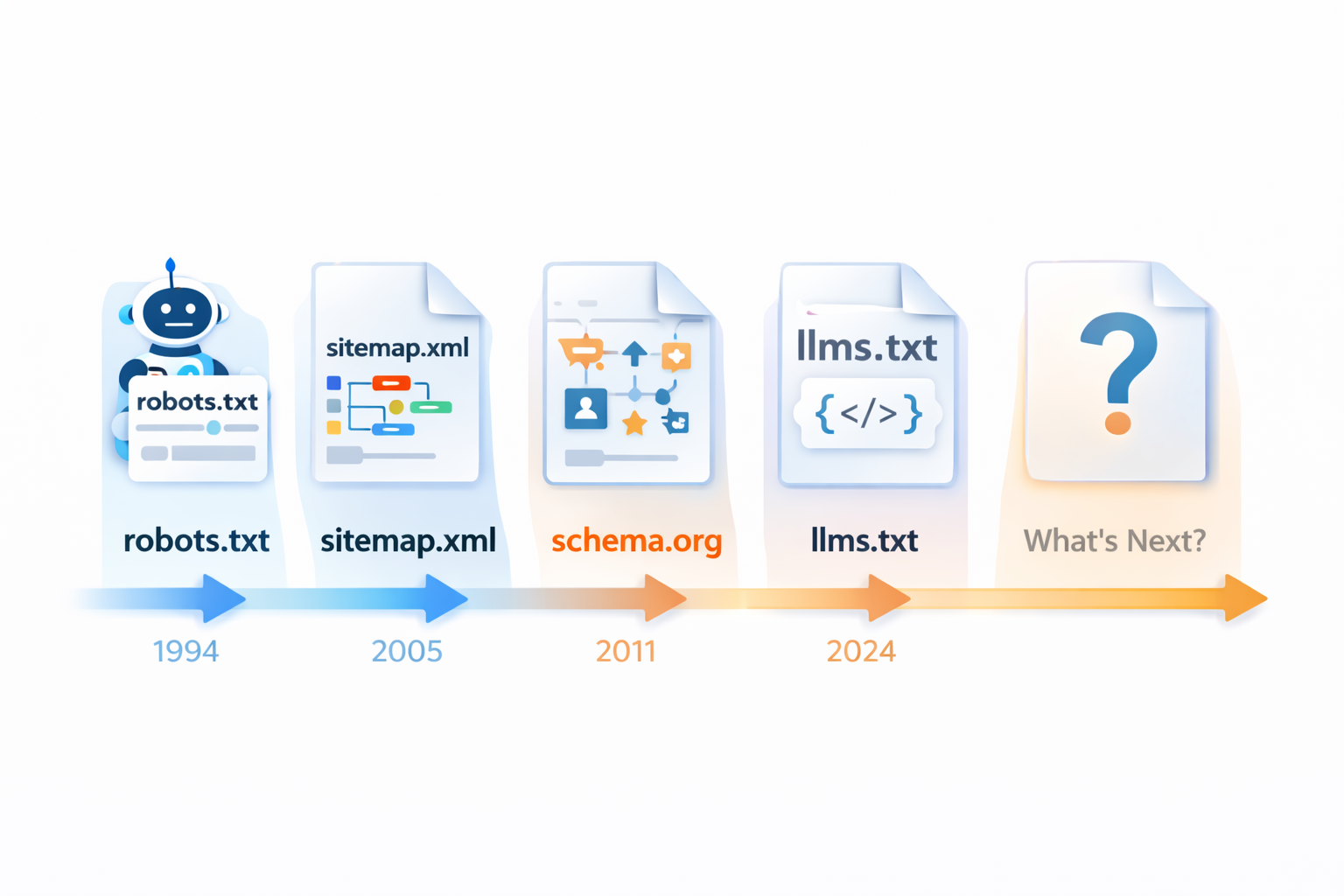
The llms.txt file is a proposal created by Jeremy Howard in September 2024. It's a plain-text Markdown file placed in your website's root directory (yourdomain.com/llms.txt) that provides a structured summary of your site's most important content for large language models.
Think of it as a curated table of contents designed for AI systems. Where robots.txt tells crawlers what NOT to access, llms.txt tells LLMs what IS worth accessing. The file typically includes your brand description, links to key pages, and optional links to Markdown versions of those pages for cleaner machine parsing.
Here's what a basic llms.txt file looks like:
# Your Brand Name

> Short description of what your company does and what content matters most.

## Docs
- [Product Overview](/product-overview.md): Core features and use cases
- [Getting Started](/getting-started.md): Setup guide for new users
- [API Reference](/api-reference.md): Technical documentation

## Blog
- [AI Visibility Guide](/blog/ai-visibility-guide.md): Complete guide to AI search
The proposal also encourages creating separate .md (Markdown) files for your key pages, giving AI crawlers clean, noise-free versions of your content without ads, navigation elements, or JavaScript complexity.
The Case For: Why People Are Implementing It
The logic behind llms.txt is sound on paper. LLMs don't crawl websites the way Google does. They fetch content in real time during inference, often struggling with JavaScript-heavy pages, ad-loaded layouts, and deeply nested site architectures. A clean Markdown file pointing to your best content could, in theory, help AI systems find and cite you more accurately.
Several credible voices support this reasoning. Crystal Carter, Head of AI Search and SEO Communications at Wix, published research in November 2025 showing that llms.txt files are being indexed by Google, with roughly 6% of indexed llms.txt pages ranking for organic keywords. Google searches for the term "llms.txt" hit around 90,000 monthly as Wix rolled out its automatic generator.
Carolyn Shelby, SEO and AI Strategist at Yoast, argues that comparing llms.txt to the old meta keywords tag (as Google's John Mueller did) misses the point. New standards take time to gain adoption, and dismissing them early may mean missing the window when they do catch on.
The CMS ecosystem is clearly betting on llms.txt. Yoast SEO, Rank Math, Wix, and multiple WordPress plugins now offer native llms.txt generation. Anthropic itself publishes an llms.txt file for its API documentation. And the community directory at directory.llmstxt.cloud lists thousands of implementations from companies like Cloudflare, Mintlify, and Tinybird.
The Case Against: What the Data Actually Shows
Here's where things get uncomfortable for the llms.txt advocates.
SE Ranking analyzed 300,000 domains and found that just 10.13% had an llms.txt file. More importantly, their machine learning model (using XGBoost) showed no correlation between having an llms.txt file and being cited by AI models. Removing the llms.txt variable from their model actually improved its accuracy, suggesting the file currently introduces more noise than signal.
ALLMO.ai's research reinforced this finding. Among the 50 most-cited domains in AI search (from Ahrefs data), only one had an llms.txt file: Target.com. Walmart had one briefly in late 2025 but removed it by January 2026. None of the top 50 German brands in AI search had one either.
Rankability's scan of the top 1,000 most visited websites globally found zero llms.txt implementations among the biggest platforms.
The expert skeptics are equally blunt. Google's John Mueller said on Reddit that no AI services have confirmed they use llms.txt, and server logs show they don't even check for it. He compared it to the old meta keywords tag. Gary Illyes stated at Search Central Live in July 2025 that Google doesn't support llms.txt and isn't planning to.
Ryan Law, Director of Content Marketing at Ahrefs, summarized the state of play: llms.txt is a speculative idea with no official adoption. OpenAI, Google, Meta, and Anthropic all rely on their own crawling mechanisms (GPTBot, Google-Extended, etc.) and none have committed to reading llms.txt.
The trust problem is real too. Unlike on-page content visible to both humans and machines, a separate Markdown file could be manipulated. A 2024 research paper on adversarial attacks against LLM search engines demonstrated that preference manipulation through optimized content could make a targeted product 2.5x more likely to be recommended. An AI-specific file hidden from human view is an obvious vector for such manipulation.
What the SEO Community Actually Thinks
The community is deeply split. Here's a fair summary of where different groups stand:
The "Not Yet" camp (Ahrefs, SE Ranking, ALLMO, Google's Mueller and Illyes): No evidence it helps. Don't prioritize it. Focus on proven fundamentals like structured data, quality content, and E-E-A-T signals. If you have bigger projects unfinished (structured data, FAQ optimization, content freshness), do those first.
The "Hedge Your Bets" camp (Wix, Yoast, many agency SEOs): It's low-effort and low-risk. The cost of creating an llms.txt file is minimal. If it becomes a standard later, you'll be glad you did it early. Don't expect results, but don't ignore it either.
The "Misinformation Loop" camp (SearchEngineJournal's analysis): SEO tools flag missing llms.txt as an issue, users feel anxiety, tools add support to meet demand, and the perception of necessity reinforces itself. It's a self-fulfilling hype cycle with no data backing it.
The HubSpot community discussions mirror this divide. Users report no measurable change after implementing llms.txt, but several note it as a "future-proofing" move that takes minimal effort.
The Balanced Take: A Decision Framework
Instead of telling you what to do, here's a framework for deciding based on your situation:
Implement llms.txt if:
- You have developer documentation, API docs, or structured technical content (this is where adoption is strongest)
- You've already completed higher-impact optimization: structured data, schema markup, content freshness signals, E-E-A-T improvements
- You can generate it automatically through your CMS (Yoast, Rank Math, Wix) without manual effort
- You want to experiment and track results
Skip llms.txt for now if:
- You haven't implemented JSON-LD structured data yet (this has proven, measurable impact on AI citations)
- Your content lacks clear structure, FAQ sections, or answers to common queries
- You'd be investing significant developer time in a manual implementation
- You're treating it as a substitute for actual content quality
Regardless of your decision, do these things first:
- Ensure your robots.txt allows AI crawlers (GPTBot, OAI-SearchBot, ClaudeBot, PerplexityBot, Google-Extended)
- Implement Article, Product, FAQ, and Organization schema markup
- Build clean, parseable content with clear headings, direct answers, and updated timestamps
- Earn third-party mentions and citations that build the trust signals AI models actually use to determine citation-worthiness
Where RepuAI's llms.txt Generator Fits
RepuAI offers a free llms.txt generator that creates a properly formatted file for your website in seconds. The tool follows the official proposal structure and outputs a ready-to-deploy Markdown file.
Here's our honest recommendation: use it as part of a broader AI visibility strategy, not as the strategy itself. Generate the file, add it to your root directory, and move on to higher-impact work. The generator is free and takes under a minute, so the opportunity cost is essentially zero.
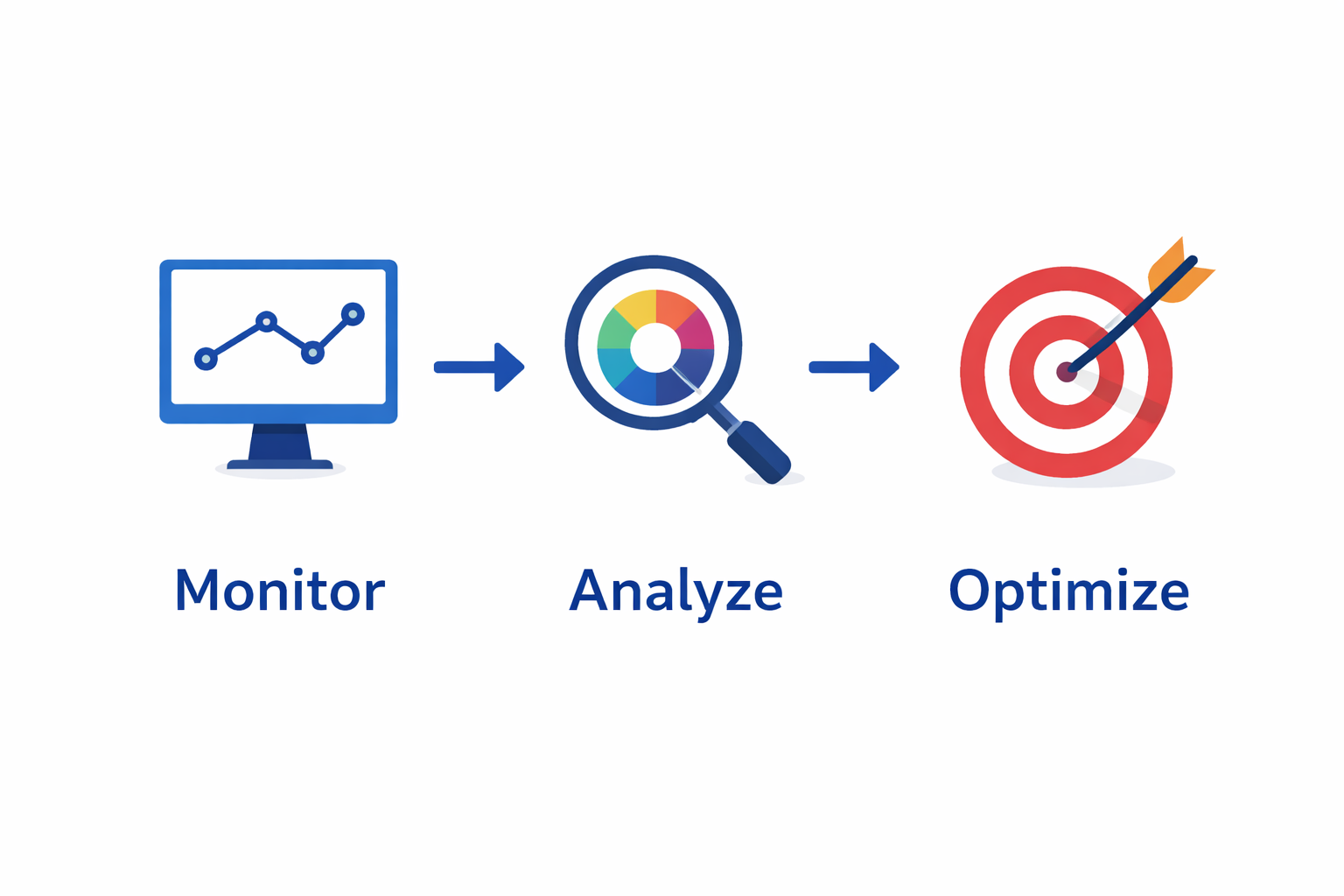
The more important question isn't whether you have an llms.txt file. It's whether AI search engines are actually recommending your brand, citing accurate information, and presenting positive sentiment. That's what RepuAI's monitoring platform tracks across ChatGPT, Perplexity, Gemini, and Claude. You can check your current standing with a free AI visibility scan.
If you're building a comprehensive AI visibility strategy, the llms.txt file is one small piece. For the bigger picture, our GEO guide covers the full spectrum of optimization tactics, and our breakdown of what content types get cited by AI engines explains what actually drives citations today.
What to Watch in the Coming Months
The llms.txt story isn't over. Several developments could shift the balance:
Per-page AI metadata may replace site-level files. Platforms like Context7 are experimenting with document-level AI signals. This mirrors how structured data evolved from site-wide declarations to page-specific schema markup. The future may not be a single llms.txt file but rather per-page machine-readable context.
CMS auto-generation removes the cost argument. As Yoast, Wix, and Rank Math make llms.txt automatic, the "should I invest time in this?" question becomes irrelevant. If your CMS generates it for free, there's no reason to actively avoid it.
Agentic AI may change the calculation. As AI agents move from answering questions to executing purchases, their need for clean, structured product data increases. A curated llms.txt pointing to Markdown versions of key product pages could become more valuable in an agentic commerce context than it is for current text-based AI search.
Adoption signals matter more than proof. The llms.txt directory already lists thousands of implementations. If a critical mass of sites adopt it, AI platforms will have increasing incentive to start reading it, even if they don't today.
The pragmatic stance: treat llms.txt as optional scaffolding, not a primary visibility lever. The fundamentals of AI visibility (clear structure, accurate information, machine-friendly formatting, and third-party authority signals) will outlast any single file format. Build those first, add llms.txt as a low-cost insurance policy, and monitor whether anything actually changes.