Generative Engine Optimization (GEO): A Practical Guide for 2026
Learn how Generative Engine Optimization (GEO) works in 2026. A practical guide with tactics, a step-by-step checklist, and tools to get your brand cited by AI search engines
Your next customer might never visit Google. They'll ask ChatGPT, type a question into Perplexity, or let Gemini pick a recommendation for them. If your brand isn't in those answers, you're invisible to a fast-growing segment of your audience.
That's where Generative Engine Optimization comes in. GEO is the practice of structuring your content so AI platforms can find it, trust it, and cite it when generating answers. It's not a replacement for SEO. It's the next layer on top of it. And in 2026, it's becoming one of the most important marketing disciplines for any brand that depends on organic discovery.
What GEO Actually Means
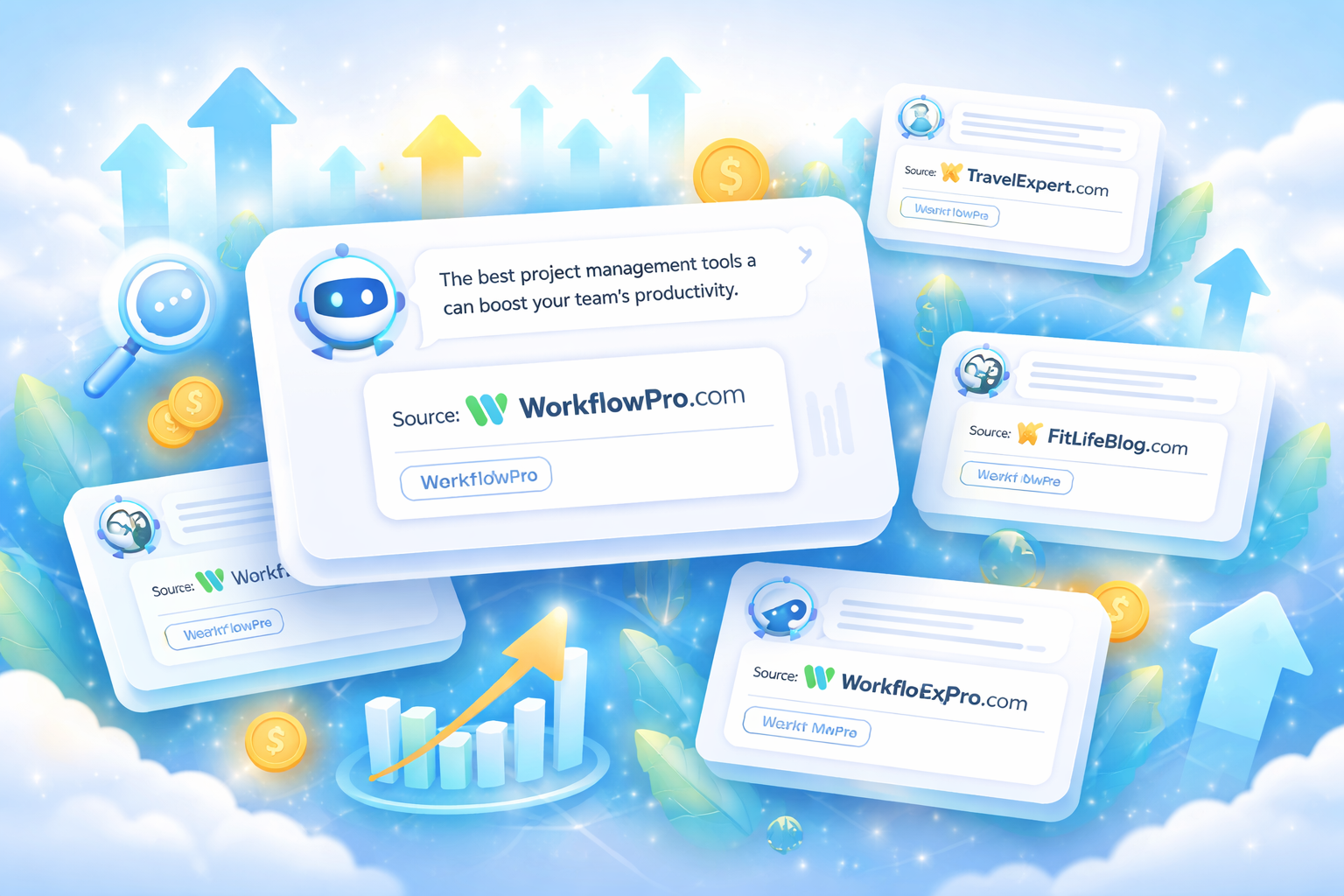
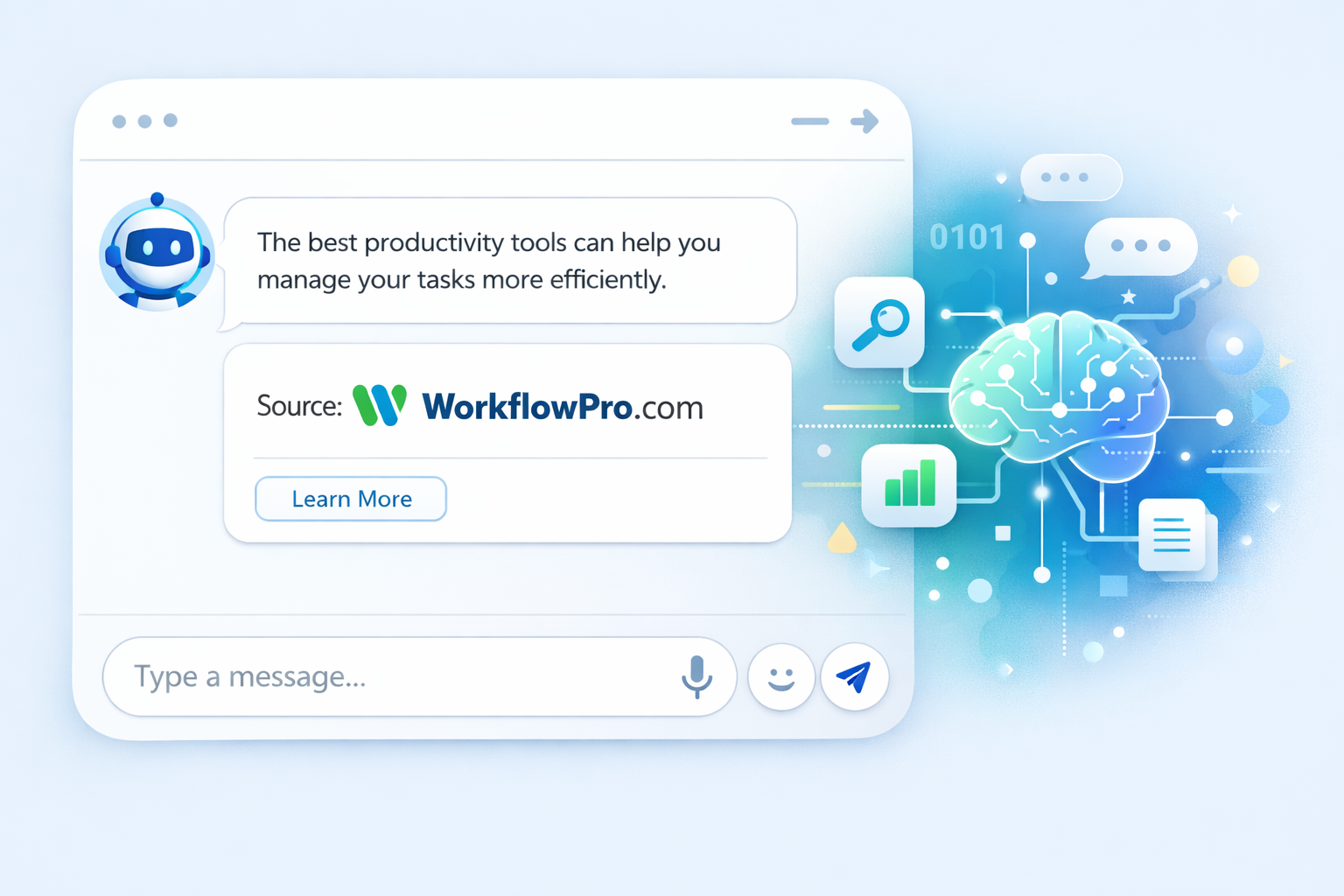
Generative Engine Optimization is the process of making your digital content visible inside AI-generated responses. When someone asks ChatGPT "what's the best project management tool for remote teams" or tells Perplexity to "compare CRM platforms for startups," the AI doesn't show a list of links. It reads multiple sources, synthesizes the information, and produces a single conversational answer, sometimes citing specific brands and pages.
GEO is about earning those citations. The term traces back to a 2023 Princeton University research paper that studied how content optimization techniques affect visibility inside generative AI responses. The researchers found that specific tactics, like adding statistics, citing credible sources, and including expert quotes, could improve AI visibility by 30 to 40 percent compared to unoptimized content.
Traditional SEO asks: "Can Google find and rank my page?" GEO asks a different question: "When an AI reads my page, will it trust my content enough to reference it in an answer?"
Why GEO Matters Now
The numbers make the case clearly. ChatGPT now has over 800 million weekly users. Google's Gemini app has surpassed 750 million monthly active users, with billions more exposed to AI Overviews in regular search. Perplexity processes hundreds of millions of queries monthly. This isn't early-adopter territory anymore. It's mainstream behavior.
At the same time, traditional search traffic is shrinking. Organic click-through rates drop by 20 to 40 percent when AI Overviews appear above standard results. Gartner projects a 25 percent decline in traditional search query volume by the end of 2026. Users aren't searching less. They're just getting answers directly from AI instead of clicking through to websites.
Here's the opportunity: AI-referred traffic converts at roughly 4.4 times the rate of standard organic search traffic. Fewer visitors, but dramatically higher intent. Brands that show up in AI answers are reaching people who are already deep into a decision process.
How AI Search Engines Select Sources
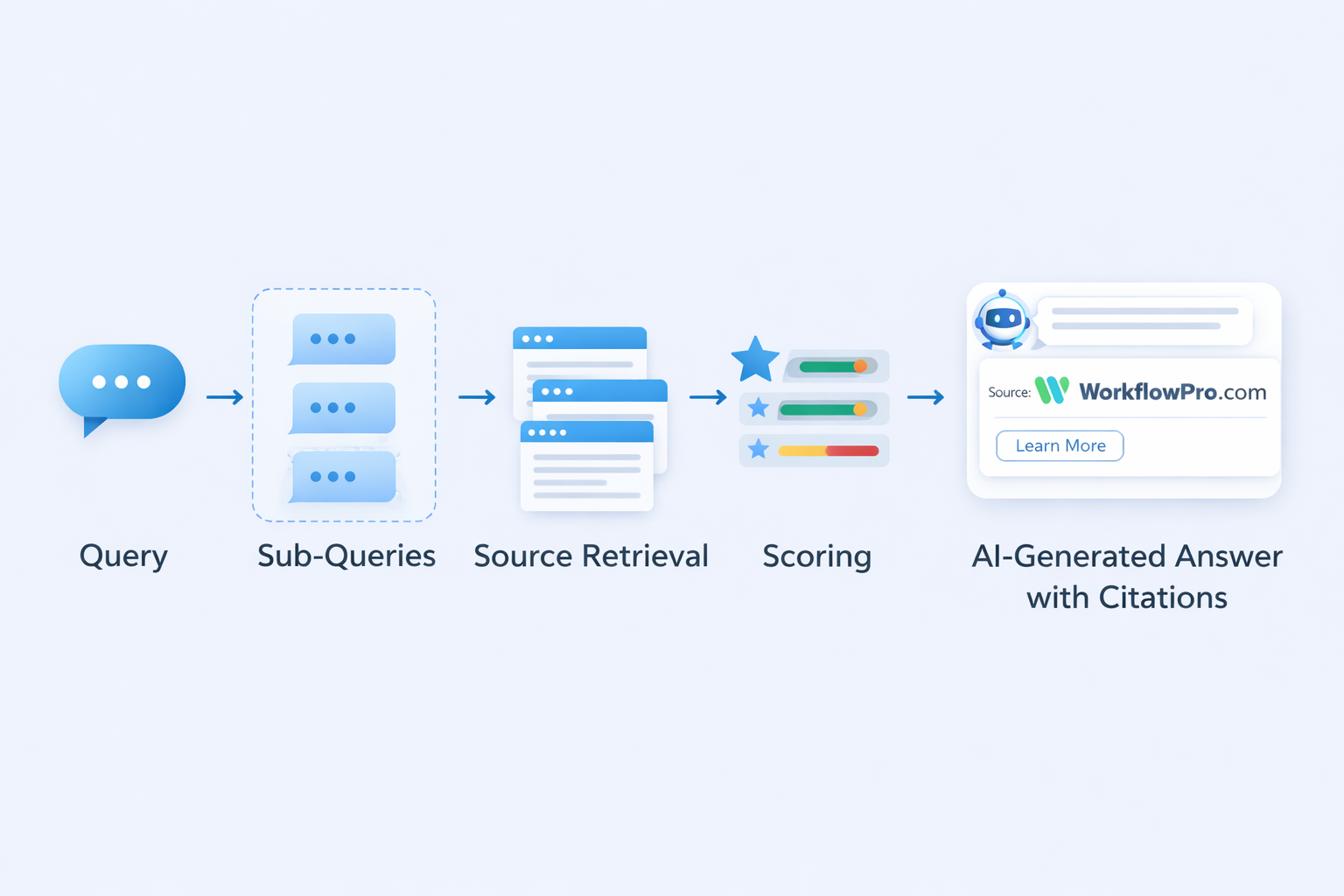
Understanding the mechanics helps you optimize effectively. Most generative search engines use a process called Retrieval-Augmented Generation (RAG), which works in two stages.
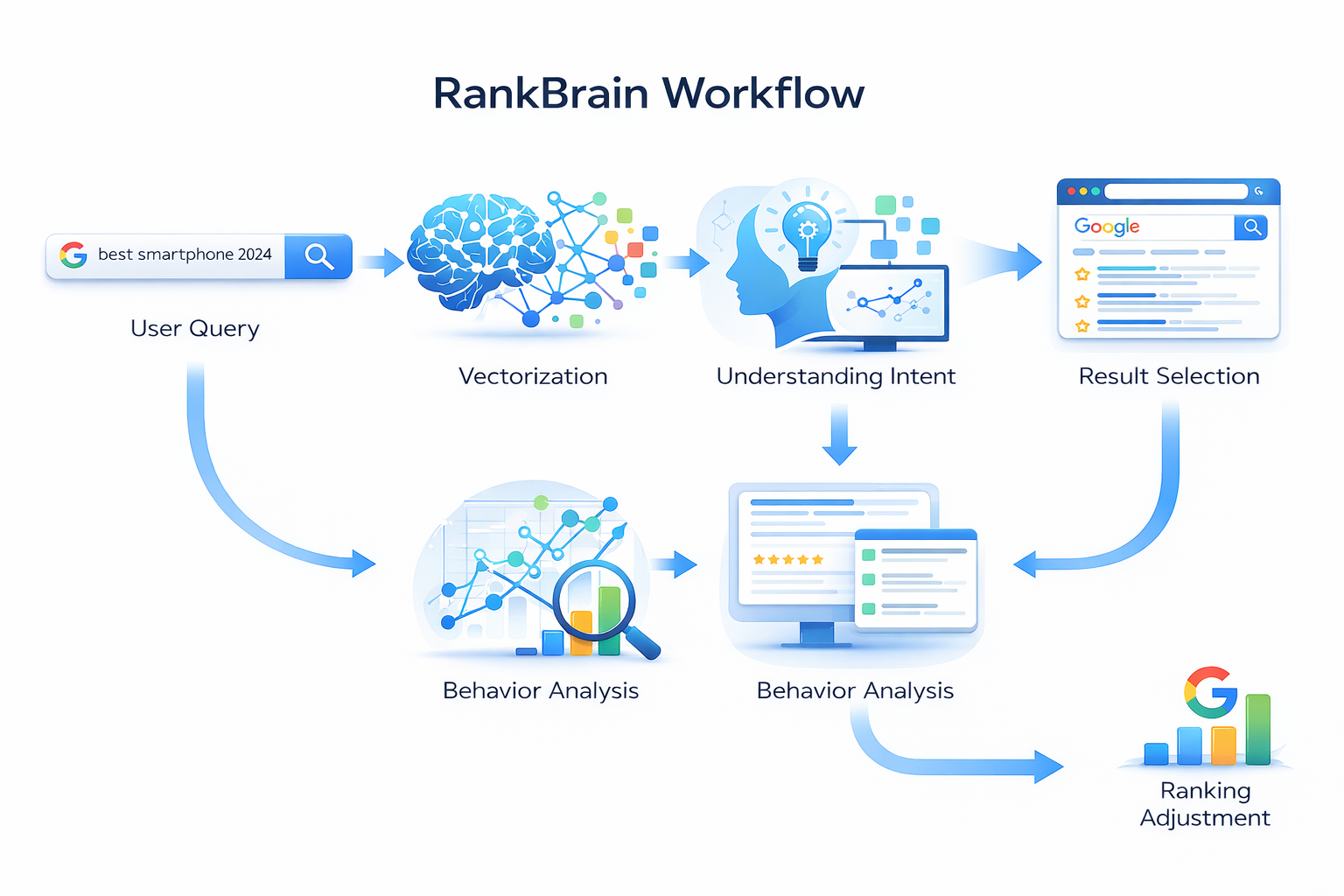
First, the AI breaks a complex query into smaller sub-queries and searches for relevant documents across the web. This is concept matching, not simple keyword matching. Your content about "optimizing for AI visibility" might surface for a query about "how to get cited by ChatGPT" even if those exact words don't appear on your page.
Second, the retrieved documents get scored on relevance, authority, recency, and structural quality. The highest-scoring content becomes the source material for the AI's response. The model then synthesizes information from multiple sources into a single answer and decides which sources to cite.
This is why GEO differs from traditional SEO at a fundamental level. Your content doesn't just need to rank. It needs to be structured in a way that AI can read, understand, trust, and reuse in a generated response.
GEO vs. SEO vs. AEO: Where Each Fits
These three disciplines overlap, but they serve different purposes. If you've already explored what AEO means in 2026 or how SEO, AEO, and AI Visibility scores connect, GEO will feel like a natural extension.
SEO optimizes your pages to rank in traditional search results. Success is measured by position, impressions, and clicks. The fundamental unit is the blue link.
AEO (Answer Engine Optimization) focuses on structuring content so it gets pulled into featured snippets, voice search responses, and knowledge panels. It's about being the direct answer.
GEO takes both further. It optimizes your content to be cited and referenced when AI models generate multi-source conversational answers. The success metric isn't a ranking position. It's whether the AI mentions your brand, links to your page, or uses your data when building a response.
You don't choose between them. SEO gives you the crawlability and authority foundation. AEO structures your content for direct answers. GEO ensures AI models can extract, trust, and cite your content inside generated responses. They work as layers, each building on the one below.
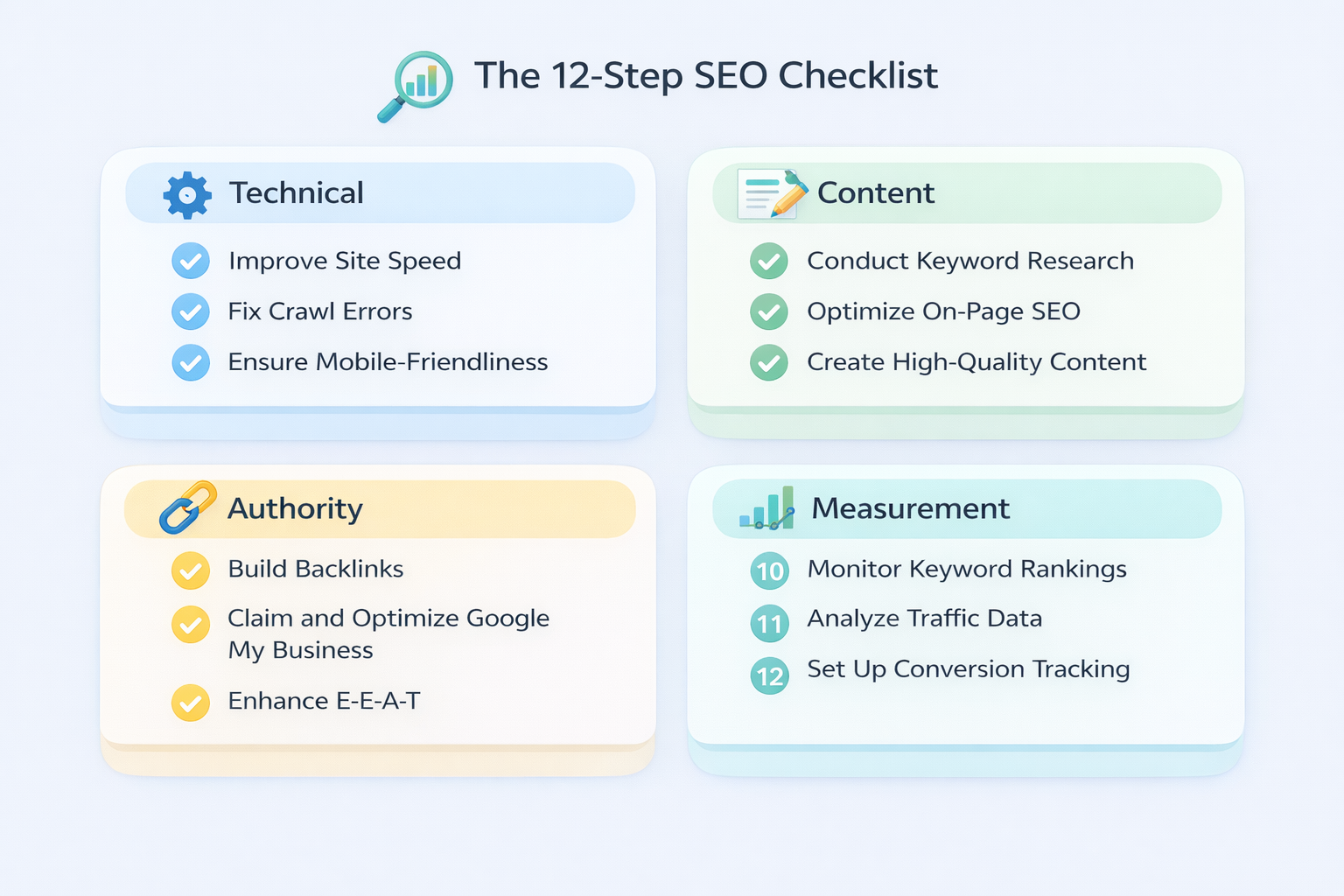
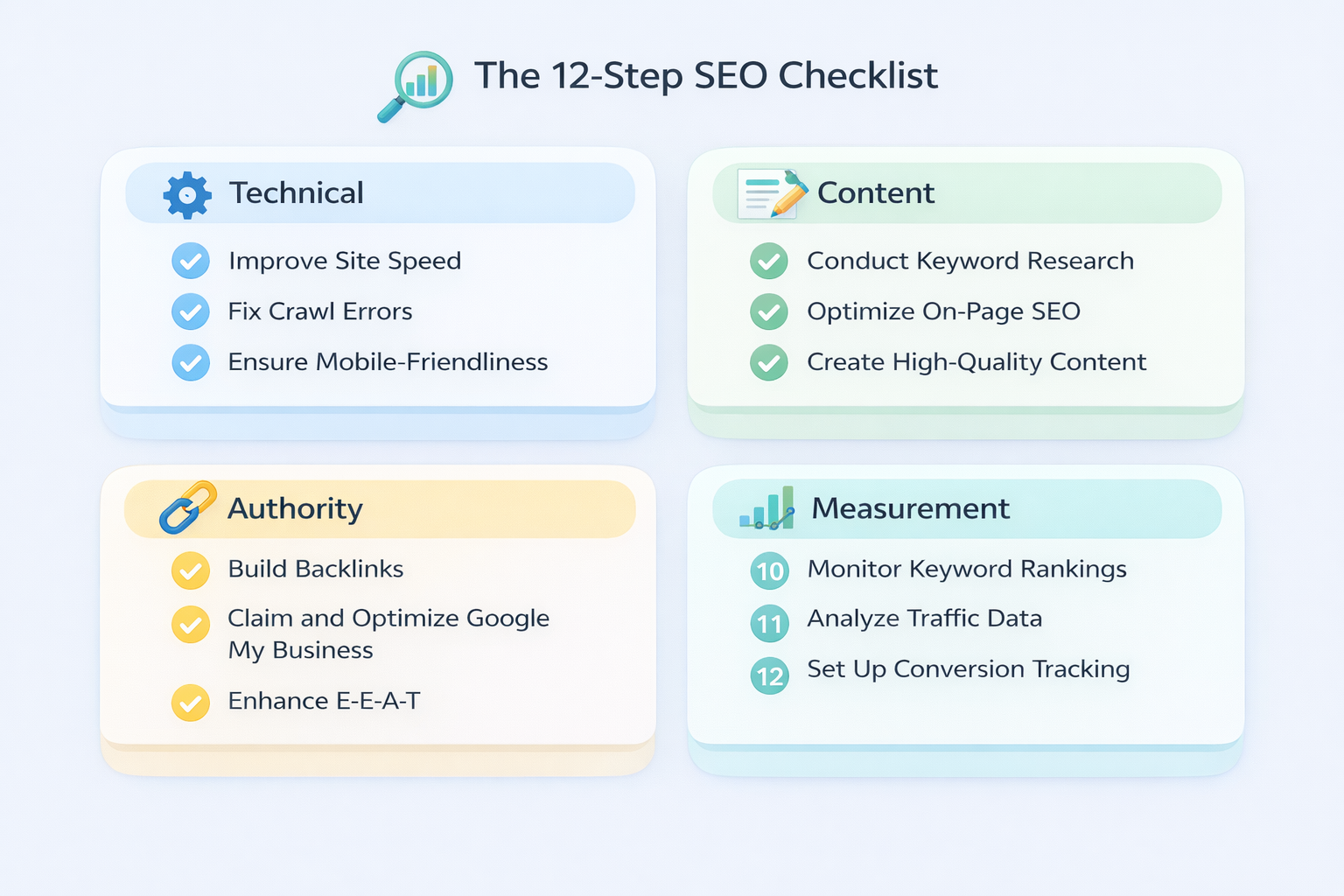
The GEO Checklist: 12 Practical Steps
This is what works in 2026, based on published research and observable patterns across ChatGPT, Perplexity, Gemini, and Claude.
Technical Access
1. Unblock AI crawlers. Check your robots.txt and CDN settings. Cloudflare recently changed its defaults to block AI bots. If your content is invisible to crawlers like GPTBot, ChatGPT-User, ClaudeBot, or PerplexityBot, no amount of content strategy will help. Review your server logs to confirm AI bots are actually reaching your pages.
2. Use server-side rendering for key content. AI crawlers typically don't execute JavaScript the way a browser does. If your main content loads only through client-side rendering, it won't be available for AI retrieval.
3. Create an llms.txt file. This is an emerging standard that helps AI systems understand your site's structure and purpose. If you haven't set one up yet, RepuAI offers a free llms.txt generator that makes the process straightforward. You can also read more about what llms.txt is and how it works.
Content Structure
4. Lead every section with the answer. AI models extract information from the top of sections first. If your H2 asks "What is GEO?" the first sentence should answer that question directly. Context and elaboration come after.
5. Format headings as questions. AI models pattern-match headers to user queries. A heading that reads "How Does GEO Differ from SEO?" is far more likely to be cited for that exact query than a heading that says "Understanding the Differences."
6. Include specific data and statistics. Statements backed by numbers are cited more often than vague claims. "AI-referred traffic converts at 4.4x the rate of organic search" is more citation-worthy than "AI traffic performs better." The Princeton GEO study confirmed that adding statistics is one of the highest-impact optimization tactics.
7. Cite credible external sources. When your content references and links to authoritative research, it signals trustworthiness to AI models. Content that shows its sources gets treated as more reliable than content that makes unsupported claims.
Authority Signals
8. Build third-party mentions. AI engines favor earned media over brand-owned content. Being mentioned in industry publications, roundup articles, and community discussions (Reddit, specialized forums) increases your chances of being cited. This is the GEO equivalent of backlink building.
9. Establish clear authorship. Bylines, author bios with credentials, and consistent entity representation across the web contribute to the E-E-A-T signals that AI models use when evaluating source credibility.
10. Keep content fresh. AI engines weigh recency when selecting sources. A guide published in 2024 without updates will lose ground to a 2026 article on the same topic. Add a visible "Last updated" timestamp and refresh your cornerstone content regularly.
Measurement and Iteration
11. Track AI citation frequency. Monitor how often your brand appears in AI-generated answers for queries relevant to your business. This is the core GEO performance metric. You can start manually by asking ChatGPT and Perplexity questions your customers would ask, and documenting whether your brand appears.
12. Monitor sentiment and accuracy. Appearing in AI answers matters, but so does how you appear. If an AI misrepresents your product or positions a competitor more favorably, you need to know.
What Most Brands Get Wrong
The biggest mistake is treating GEO as a one-time content project. Companies publish a few "optimized" articles, check a box, and move on. But AI models update their sources constantly. What gets cited today might not get cited next month if a competitor publishes something more current, more specific, or more authoritative.
Another common error: ignoring the difference between AI platforms. ChatGPT, Perplexity, Gemini, and Claude each have different retrieval behaviors, source preferences, and citation patterns. A strategy that works for one might underperform on another. ChatGPT leans heavily on domain authority and readability. Perplexity favors real-time, factual content with clear attributions. Understanding these differences matters if you want consistent visibility across platforms.
The third mistake is neglecting your existing presence. Many brands focus entirely on new content when their biggest opportunity is restructuring what they already have. Reformatting headings as questions, adding data to existing articles, and updating publication dates can produce measurable improvements faster than starting from scratch.
Measuring GEO Results
Traditional analytics tools weren't built for GEO. You won't find "AI citation rate" in Google Analytics. But there are practical ways to track your progress.
Start with manual audits. Pick 20 to 30 prompts your ideal customers might use, run them across ChatGPT, Perplexity, and Gemini, and record whether your brand appears, in what context, and with what sentiment. Do this monthly to track trends.
Look at referral traffic from AI domains in your analytics. Traffic from chat.openai.com, perplexity.ai, and similar sources shows up in your referral data and gives you a quantitative baseline.
For teams that need to do this at scale, tools built specifically for AI visibility monitoring make the process manageable. RepuAI tracks how your brand appears across major AI search engines, monitors sentiment, and lets you compare your visibility against competitors. It automates the kind of monitoring that would otherwise take hours of manual prompt testing every week. Instead of guessing whether your GEO efforts are working, you get clear data on citation frequency, positioning, and how AI models describe your brand over time.
Where GEO Goes from Here
GEO isn't a short-term trend. As AI search adoption accelerates, the gap between brands that invest in AI visibility and those that ignore it will keep widening. Citation authority compounds over time, much like domain authority did in the early years of SEO. The brands building it now will have a significant advantage when the market gets more competitive.
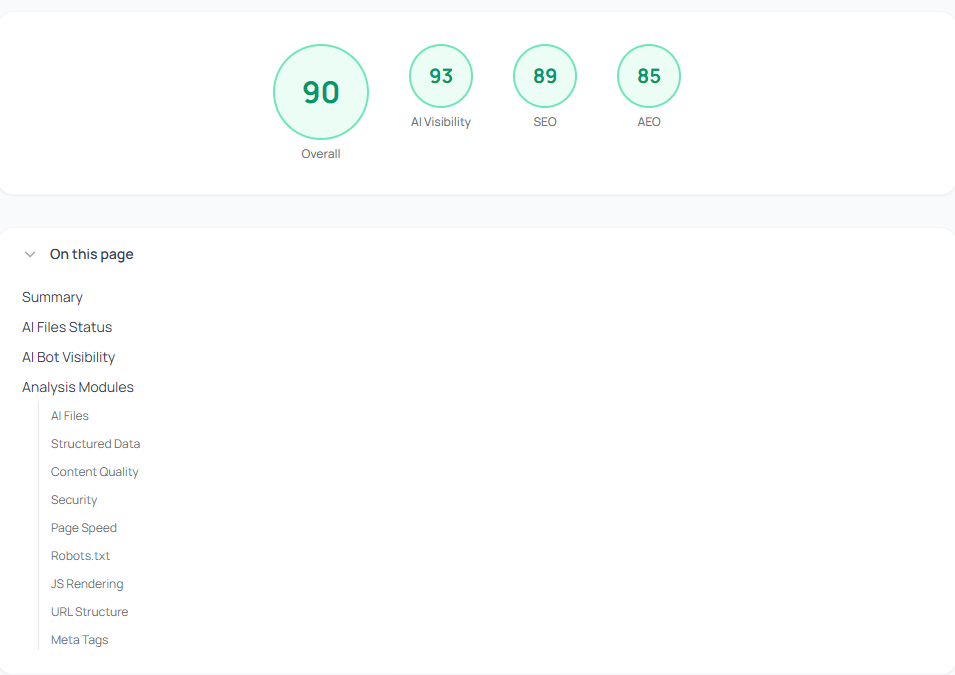
The practical starting point is simple. Check how your site currently performs for AI readiness. Audit your robots.txt. Pick your five most important pages and restructure them using the checklist above. Then measure the results and iterate.
GEO isn't about abandoning what works. It's about extending your visibility into the places where your audience is increasingly spending their time.