Why Your Brand Doesn't Appear in ChatGPT
ChatGPT answers millions of questions every day - but your brand isn't in any of them. Discover the real reasons AI models ignore your business and the concrete steps you can take to fix your AI visibility today
Why Your Brand Doesn't Appear in ChatGPT (And What to Do About It)
You've spent years building your brand. You rank on Google. You have reviews, backlinks, a polished website. So why does ChatGPT recommend your competitors instead of you?
You're not alone. Thousands of businesses are waking up to the same uncomfortable truth: ranking on Google and existing in AI answers are two completely different games — and most brands are losing the second one without even knowing it.
Let's break down exactly why your brand is invisible to ChatGPT, Perplexity, Grok, and other AI search engines, and what you can actually do about it.
The AI Search Revolution Nobody Warned You About
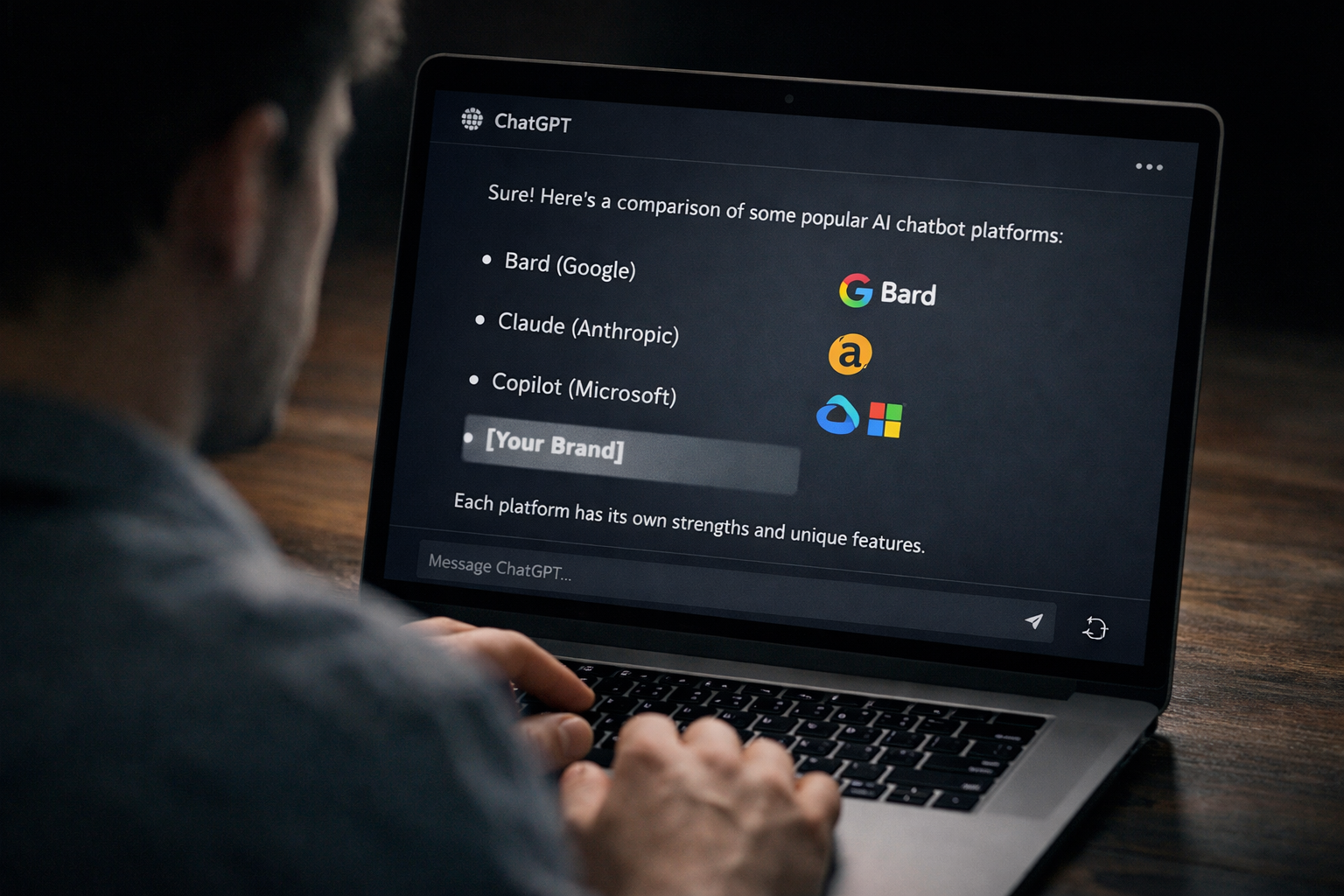
When people wanted information five years ago, they typed keywords into Google and scanned a list of blue links. Today, millions of users simply ask ChatGPT a question and trust the answer they get — no clicking, no comparing, no scrolling.
According to industry estimates, ChatGPT now processes over 100 million conversations per day. A growing share of those conversations are commercial: "What's the best project management tool for a small team?" or "Which CRM should I use for my e-commerce store?"
If your brand doesn't appear in those answers, a competitor takes the customer — and you never even knew you were competing.
This isn't SEO as you know it. It's a new discipline called Generative Engine Optimization (GEO) - and most brands haven't started playing yet.
5 Reasons ChatGPT Doesn't Know Your Brand Exists
1. Your Brand Isn't in the Training Data (Or Barely Is)
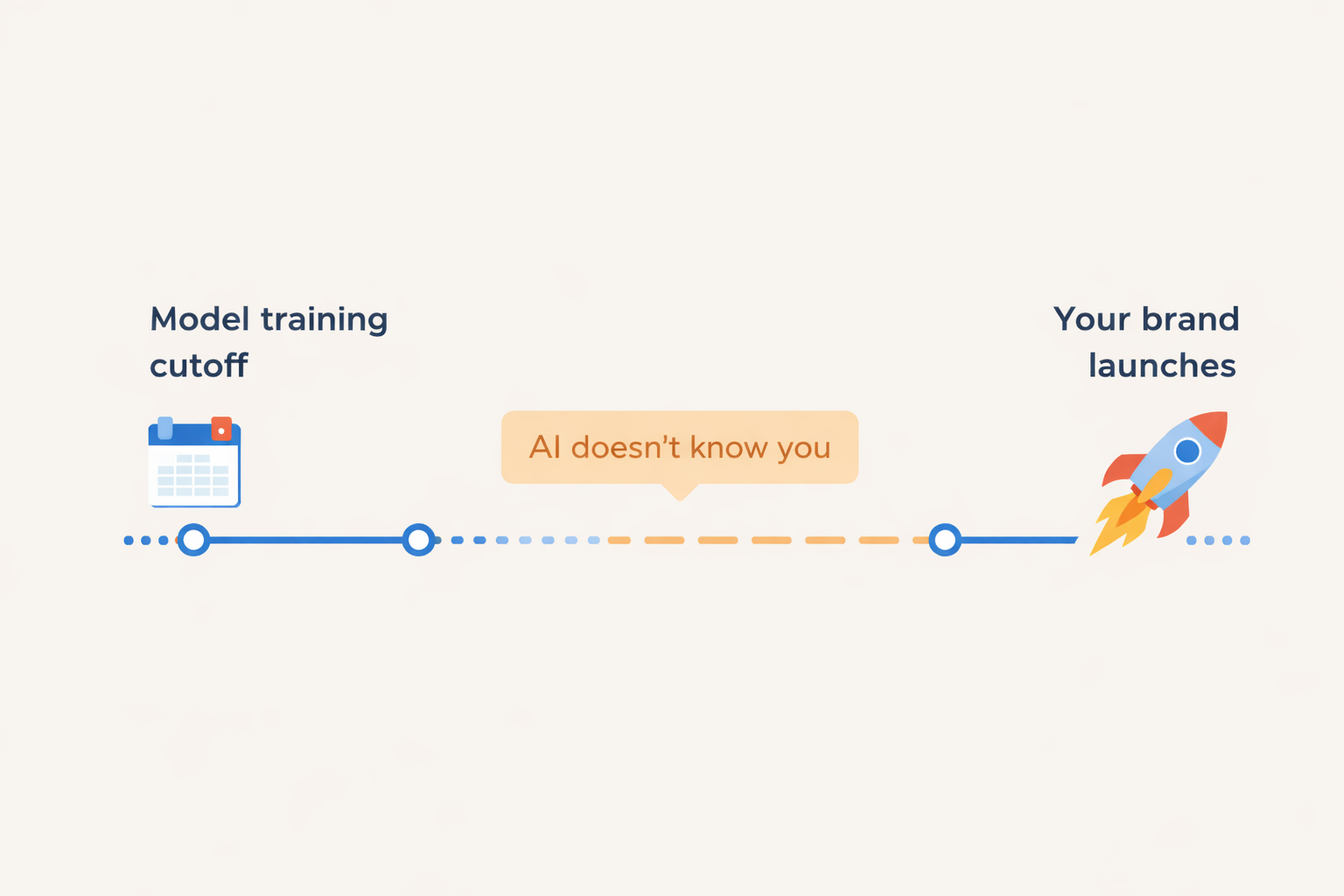
Large language models like GPT-4 are trained on massive snapshots of the internet. That training data was collected at a specific point in time. If your brand was small, new, or niche when that snapshot was taken — or if the web pages about you were thin and unstructured — the model learned almost nothing about you.
Think of it like this: Google indexes your page within days. ChatGPT learned about the world months or years ago. A brand that launched after the model's knowledge cutoff simply doesn't exist in its memory.
The fix: Build a consistent, authoritative presence across high-authority third-party sources right now, so the next model update includes you.
2. You Don't Have Enough Third-Party Mentions
Here's something most marketers haven't internalized yet: AI models don't primarily learn from your own website. They learn from what other people say about you — news articles, review platforms, industry publications, forums, and social media.
Industry research suggests that roughly 250 quality external publications are needed to meaningfully influence how an LLM perceives and recommends a brand. That's not 250 blog comments — that's 250 credible, substantive mentions across the web.
If your brand lives mainly on your own domain, you're invisible to AI. You need a digital PR strategy built specifically for AI training data, not just for human readers.
3. Your Website Isn't Structured for AI Crawlers
Traditional SEO taught you to optimize for Google's crawler. But AI systems use different signals:
- Schema markup (organization, product, FAQ, author) helps AI models understand what you are, not just what you say.
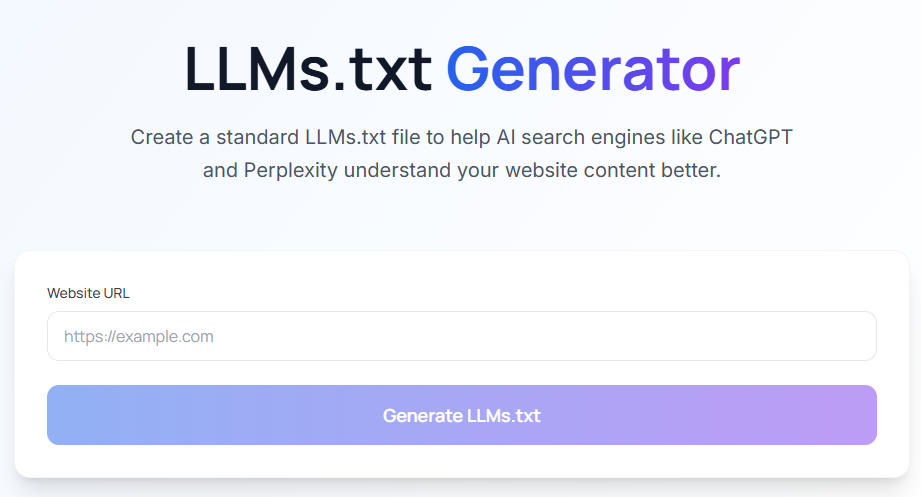
- llms.txt files are an emerging standard that tells AI crawlers how to interpret your content.
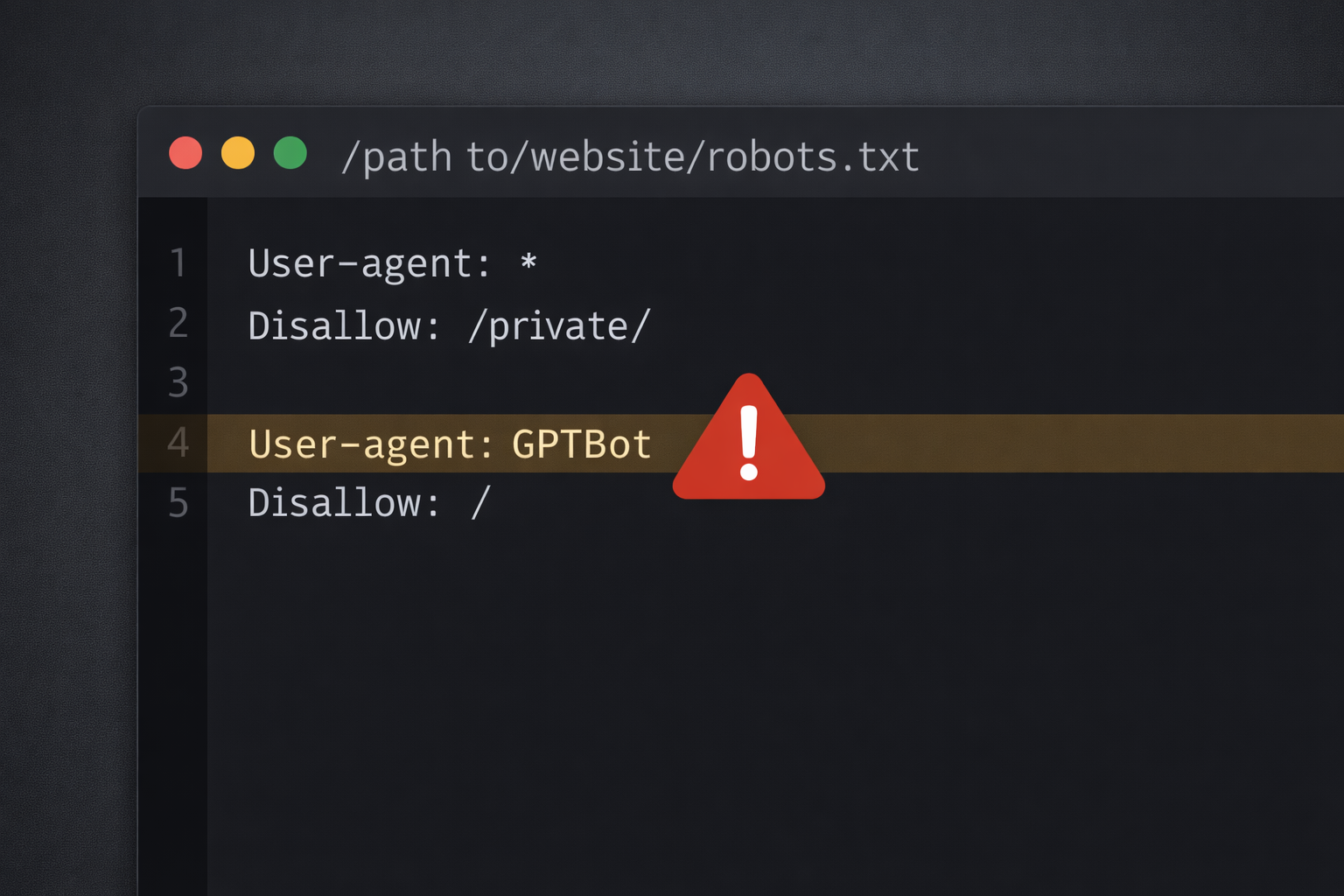
- robots.txt and AI bot permissions — many sites accidentally block AI crawlers like GPTBot and PerplexityBot while allowing Google.
Yes, you read that right. You might be blocking ChatGPT from reading your site entirely — and you'd never know unless you checked.
4. Your Content Doesn't Answer Questions Directly
Google rewards keyword density and backlinks. AI models reward direct, clear answers to specific questions.
When someone asks ChatGPT "What is the best tool for monitoring my brand in AI search?", the model scans its training data for sources that clearly and authoritatively answer that exact question. If your content is vague, jargon-heavy, or structured around keyword stuffing rather than real answers — you lose.
GEO-optimized content looks like this:
- Clear FAQ sections with direct Q&A format
- Structured headers that match natural language questions
- Concise explanations before going deep
- Named entities (your brand name, product names, team names) used consistently
5. You Have No System to Track AI Visibility
Here's the hardest truth: you can't fix what you can't measure.
Most businesses have zero visibility into how — or whether — their brand appears in AI-generated responses. Traditional analytics tools like Google Search Console, Ahrefs, and SEMrush were built for a link-based web. They don't track ChatGPT mentions, AI sentiment, or generative search share.
Without measurement, you're flying blind. You might be losing customers to AI-recommended competitors every single day and have no idea.
What You Can Actually Do Right Now
Step 1: Audit Your Current AI Visibility
Before fixing anything, understand where you stand. Ask ChatGPT, Perplexity, and Gemini the questions your customers would ask — and see who they recommend. Do you appear? Do competitors dominate? What's the sentiment around your brand?
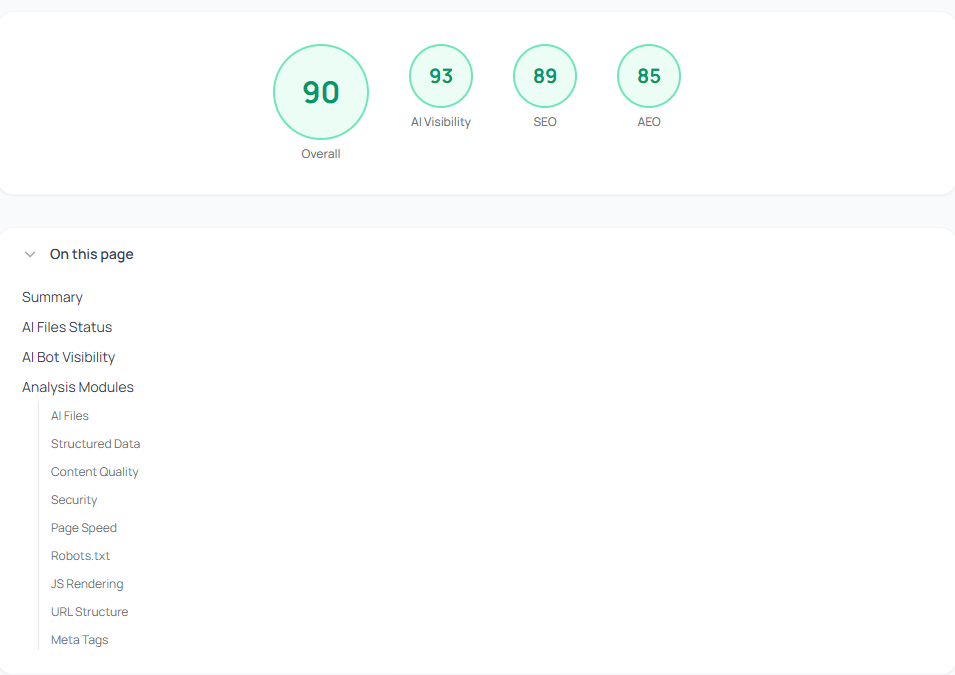
Tools like RepuAI automate this process — tracking your brand mentions across AI search engines, measuring sentiment, and alerting you when competitors gain ground. Their free site checker gives you an AI Visibility score in under 30 seconds.
Step 2: Fix Your Technical AI Accessibility
Run a technical audit specifically for AI bots:
- Check your robots.txt: are GPTBot, PerplexityBot, ClaudeBot, and other AI crawlers allowed?
- Add an
llms.txtfile to your root domain with clear instructions for AI crawlers - Implement Organization schema markup on your homepage
- Add FAQ schema to your key landing pages and blog posts
- Ensure your site loads fast — AI crawlers deprioritize slow sites just like Google does
Step 3: Build Third-Party Authority at Scale
This is the long game, but it's the most important one:
- Digital PR campaigns targeting industry publications that LLMs are trained on
- Review generation on platforms like G2, Trustpilot, and Capterra — these are cited frequently in AI answers
- Forum and community presence on Reddit, Quora, and industry-specific platforms
- Podcast and interview appearances — transcripts and show notes create high-quality training data
- Consistent brand mentions across social media, Wikipedia (if eligible), and niche directories
The goal isn't just backlinks — it's teaching the model what your brand is, what problem you solve, and why you're credible.
Step 4: Rewrite Your Content for AI Readability
Go through your top landing pages and blog posts with fresh eyes. Ask yourself: if an AI model was trying to recommend a solution to a customer, would this page give it enough clear, structured information to do so?
Rewrite content to:
- Lead with direct answers, not preamble
- Use your brand name and product names naturally and consistently
- Include specific data points, use cases, and named comparisons
- Add FAQ sections at the bottom of every key page
- Use clear heading hierarchies (H1 → H2 → H3) that mirror natural question structures
Step 5: Monitor, Iterate, and Track Competitors
AI visibility isn't a one-time fix — it's an ongoing discipline. Set up regular monitoring:
- Weekly checks of how your brand appears in key AI platforms
- Tracking competitor mentions to understand what's working for them
- Monitoring sentiment shifts after PR campaigns or product launches
- Measuring whether your content improvements are translating into more AI recommendations
RepuAI is purpose-built for exactly this — giving you a real-time dashboard of your brand's presence across ChatGPT, Perplexity, Grok, and other AI search engines, so you're never flying blind again.
The Window Is Still Open — But It Won't Be Forever
Right now, most businesses haven't invested in GEO at all. That means the brands that act in the next 6–12 months will lock in positions in AI model training data and recommendation patterns that will be very hard for late movers to displace.
This is the same opportunity that existed in early Google SEO — but the window is much shorter, because AI adoption is accelerating faster than the internet did in the late 1990s.
The question isn't whether AI search will matter to your business. It's whether you'll be visible when it does.
Quick Summary: Why Your Brand Is Invisible to ChatGPT
| Reason | The Fix |
|---|---|
| Not in training data | Build third-party presence now |
| Too few external mentions | Digital PR at scale (aim for 250+ quality publications) |
| AI crawlers blocked | Fix robots.txt, add llms.txt |
| Content not AI-readable | Rewrite for direct Q&A format + schema markup |
| No visibility tracking | Use RepuAI to monitor AI mentions and sentiment |
Start with a Free AI Visibility Audit
Not sure where your brand stands today? RepuAI's free site checker analyzes your website for AI Visibility, SEO, and AEO in under 30 seconds — giving you a clear score and actionable recommendations.
Stop guessing. Start measuring. And make sure the next time someone asks ChatGPT for a recommendation in your industry, your brand is in the answer.