Local SEO From Scratch: Get Real Traffic From Your Region
Learn local SEO from scratch with our actionable checklist. Get more regional traffic, rank in local packs, and attract nearby customers to your business
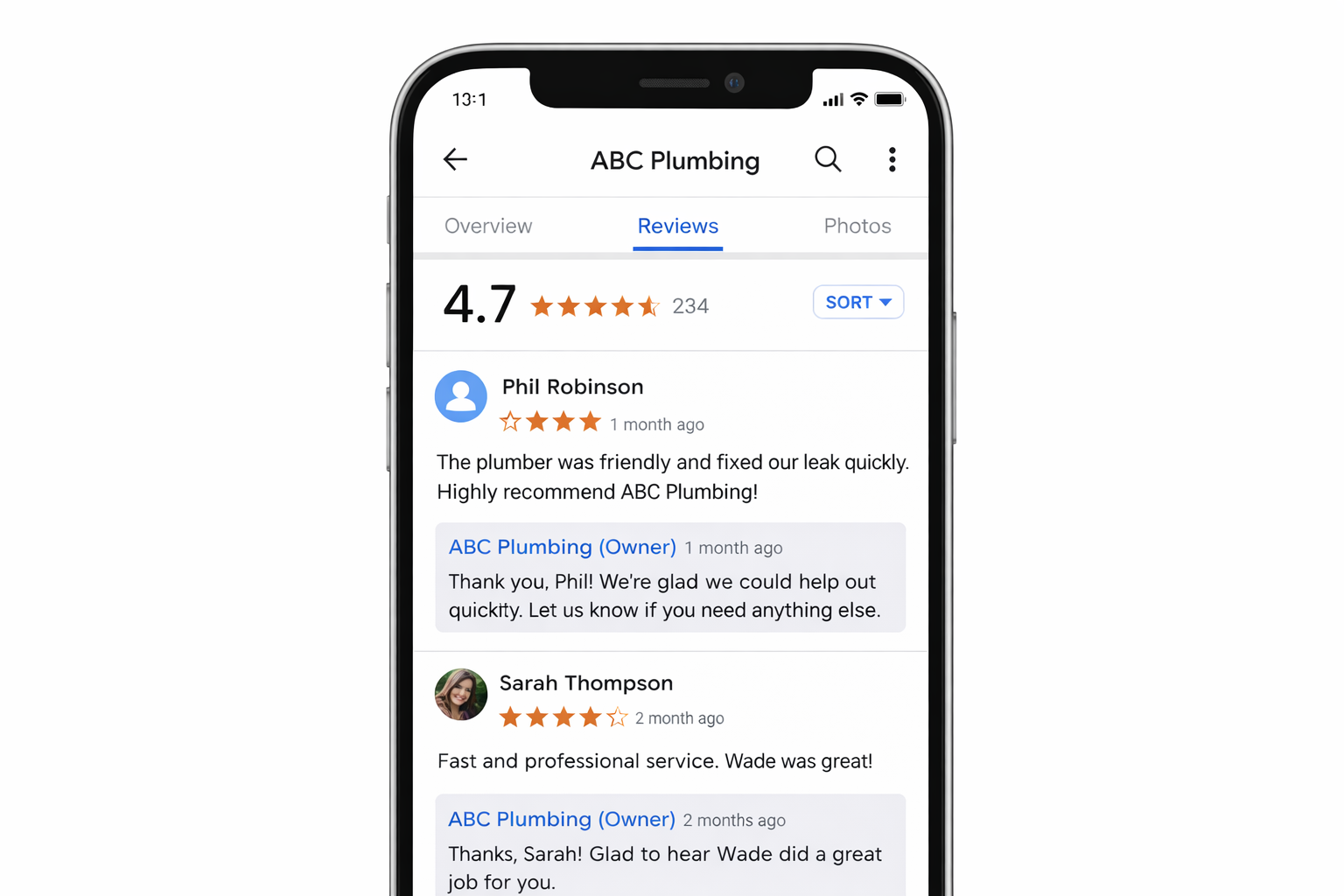
46% of all Google searches have local intent. That's nearly half of every query typed or spoken into the world's biggest search engine, and it means someone nearby is looking for exactly what you sell - right now.
Yet most small and mid-sized businesses treat local SEO as an afterthought. They'll spend months chasing national keywords with four-digit difficulty scores while ignoring the people ten minutes away who are ready to buy. That's money walking out the door.
This guide is built for teams starting from zero. No fluff, no vague advice. Just a local SEO checklist you can work through this week and start seeing results within 30-60 days.
Why Local SEO Deserves Its Own Strategy
Local SEO isn't just "SEO, but for your city." It runs on a different set of ranking signals, surfaces results in different formats (the map pack, local finder, voice answers), and targets people at a fundamentally different stage of the buying journey.
Think about it. Someone searching "best CRM software" is researching. Someone searching "coffee shop near me open now" is walking there in three minutes. Local searches convert at a much higher rate precisely because intent is so strong. Google reports that 76% of people who search for something nearby visit a business within 24 hours.
Your competition for local queries is also different. You're not fighting HubSpot or Nike. You're competing with the dry cleaner across the street and the three other dentists in your zip code. That's a winnable fight, even with a modest budget.
The Foundation: Google Business Profile (Do This First)
If you only do one thing from this entire article, make it this: claim, verify, and fully optimize your Google Business Profile (GBP). It's free, and it's the single most influential factor in local pack rankings.
Here's what a complete GBP setup looks like:
- Business name matches your real-world signage exactly. No keyword stuffing in the name field - Google penalizes this.
- Primary category is as specific as possible. "Italian Restaurant" beats "Restaurant." You can add secondary categories too.
- Address and phone number are consistent with your website and every other listing online (more on this below).
- Business hours are accurate, including holiday hours. Outdated hours generate negative reviews fast.
- Description uses your primary local keywords naturally in the first two sentences.
- Photos: Upload at least 10. Businesses with photos get 42% more direction requests on Google Maps, according to Google's own data. Include the exterior, interior, team, and products.
- Google Posts: Treat these like mini social media updates. Post weekly with offers, events, or news.
One thing most guides skip: enable messaging and Q&A. These features signal to Google that your profile is active and engaged. Answer every question, even the silly ones.
NAP Consistency: The Boring Thing That Breaks Local Rankings
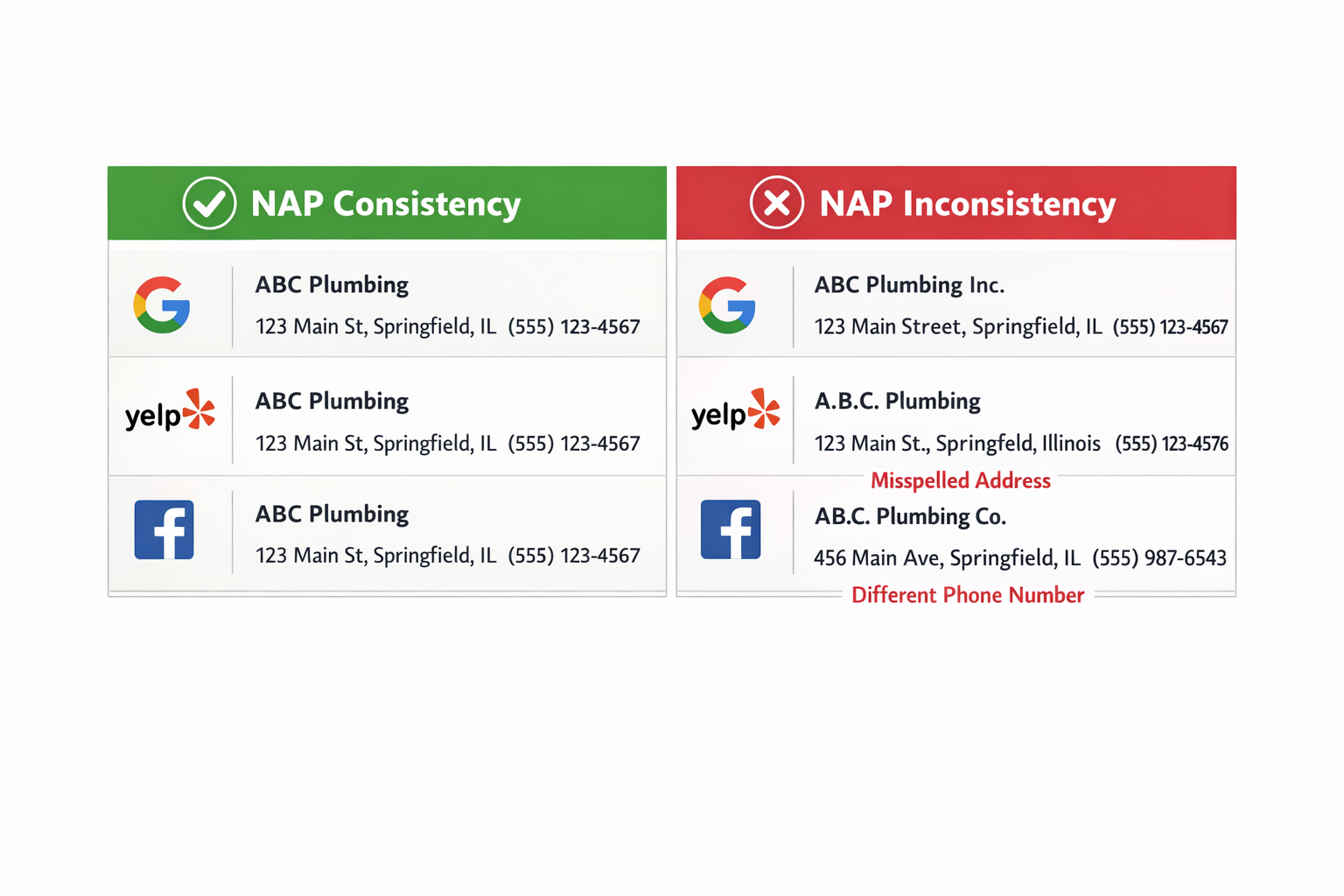
NAP stands for Name, Address, Phone number. And it needs to be identical - character for character - across every place your business appears online. Your website footer, your GBP, Yelp, Facebook, Apple Maps, industry directories, the local Chamber of Commerce listing, all of them.
Why does this matter so much? Search engines cross-reference your NAP data to verify you're a legitimate, established business. Inconsistencies create doubt. If Google finds "123 Main St" on your site but "123 Main Street, Suite 2" on Yelp, it's less confident about showing you in results.
A practical approach: open a spreadsheet and audit every listing you can find. Search your business name, phone number, and address on Google. Use tools like BrightLocal or Moz Local to find citations you've forgotten about. Fix every mismatch. Then pick a canonical version of your NAP and stick with it everywhere going forward.
Local Schema Markup: Speak Google's Language
Local schema markup is structured data you add to your website's code so search engines can understand your business details without guessing. Think of it as filling out a machine-readable business card.
At minimum, you want LocalBusiness schema on your homepage (or location pages, if you have multiple). Here's what to include:
{
  "@context": "https://schema.org",
  "@type": "LocalBusiness",
  "name": "Your Business Name",
  "address": {
    "@type": "PostalAddress",
    "streetAddress": "123 Main St",
    "addressLocality": "Austin",
    "addressRegion": "TX",
    "postalCode": "78701"
  },
  "telephone": "+1-512-555-0100",
  "openingHours": "Mo-Fr 09:00-17:00",
  "geo": {
    "@type": "GeoCoordinates",
    "latitude": "30.2672",
    "longitude": "-97.7431"
  },
  "url": "https://yourbusiness.com",
  "image": "https://yourbusiness.com/photo.jpg",
  "priceRange": "$$"
}
Use a more specific @type when one fits. Dentist, Restaurant, LegalService - there are dozens of subtypes. The more specific you are, the better search engines can match you to relevant queries.
After adding schema, validate it with Google's Rich Results Test. Broken markup is worse than no markup because it can confuse crawlers.
The Local SEO Checklist: Your Week-by-Week Plan
Here's a practical sequence you can follow. Don't try to do everything at once. Spread it across four weeks.
Week 1 - Claim your territory
- Claim and verify your Google Business Profile
- Audit and fix NAP consistency across the top 20 directories
- Add local schema markup to your website
Week 2 - Build your content foundation 4. Create a dedicated page for each location you serve (if multiple) 5. Write city-specific content: "Best [service] in [city]" guides, local event coverage 6. Optimize title tags and meta descriptions with local keywords ("plumber in Denver", not just "plumber")
Week 3 - Earn trust signals 7. Ask your five most recent happy customers for Google reviews 8. Respond to every existing review, positive and negative 9. Get listed in three local/industry-specific directories you're missing
Week 4 - Amplify and monitor 10. Set up a process for ongoing review generation (email follow-ups, QR codes at checkout) 11. Build one local backlink (sponsor a community event, contribute to a local blog, join a business association) 12. Monitor your local keyword rankings and GBP insights weekly
This isn't a one-time project. Local SEO rewards consistency. The businesses that post to GBP weekly, respond to reviews within 24 hours, and keep publishing local content are the ones that hold map pack positions long-term.
Reviews: Your Most Powerful (and Most Neglected) Ranking Factor
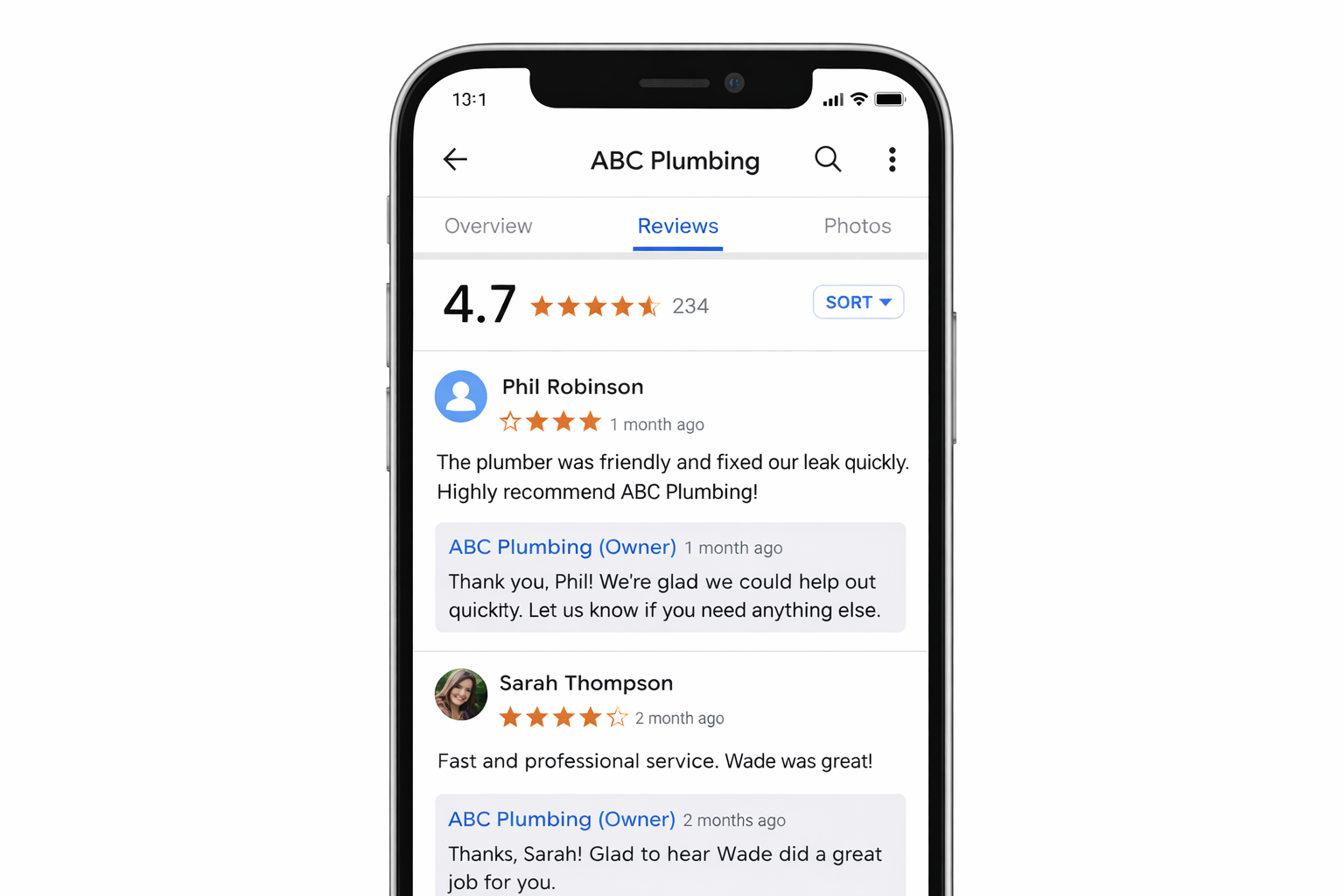
Google's local ranking algorithm weighs three things heavily: relevance, distance, and prominence. Reviews are the biggest driver of prominence. More reviews, higher average rating, and frequent recent reviews all push you up.
But here's what most businesses get wrong: they wait for reviews to happen organically. They don't. You need a system.
The simplest approach that works? Send a follow-up email or text 24-48 hours after a purchase or service completion. Include a direct link to your Google review page (you can generate this link in your GBP dashboard). Keep the ask short: "If you had a good experience, a quick Google review would mean a lot to us."
Responding to reviews matters just as much as collecting them. A BrightLocal study found that 88% of consumers are more likely to use a business that responds to all reviews. And when you get a negative review, don't panic. A thoughtful, professional response often impresses potential customers more than a wall of five-star ratings.
Local Content That Actually Ranks
"Blog about local stuff" is advice you'll find in every local SEO guide. But what does that actually mean?
Here are content formats that consistently perform for local businesses:
"Best of" and comparison pages. "Best brunch spots in Portland" or "Top 5 co-working spaces in Raleigh." These attract links, get shared, and rank for high-intent local queries. Yes, you can include competitors. It shows confidence, and Google rewards comprehensive content.
Service + location pages. If you're a plumber serving six suburbs, don't cram them all onto one page. Create "Plumbing Services in [Suburb]" pages with unique content for each. Include local landmarks, neighborhoods, and specific problems common in that area (old pipes in historic districts, hard water issues in certain zip codes).
Local news and event coverage. Sponsor a 5K? Write about it. New zoning laws affecting your industry? Break it down. This builds topical authority and earns backlinks from local media and community sites.
Customer stories with location context. "How We Helped a Downtown Austin Bakery Reduce Water Damage" is ten times more compelling than a generic case study.
What About AI Search Engines?
Here's a question most local SEO guides ignore: what happens when your customers start asking ChatGPT or Perplexity "best Italian restaurant near me" instead of Googling it?
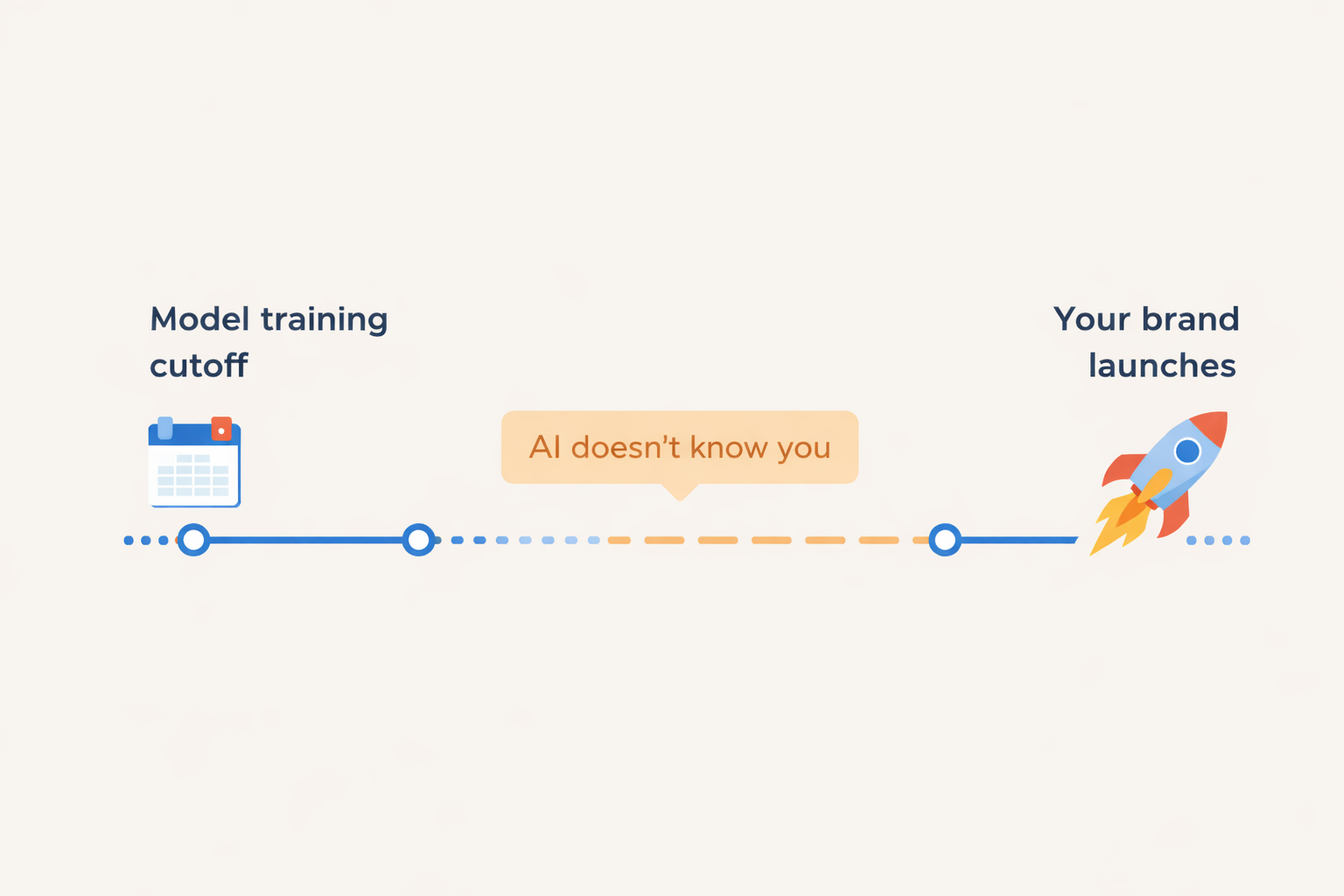
It's already happening. AI search engines are pulling data from reviews, business directories, website content, and structured data to generate answers. And unlike traditional search, there's no page two. You're either mentioned in the AI response, or you don't exist.
The good news: most of the local SEO fundamentals above, consistent NAP data, strong reviews, schema markup, quality content, are exactly what AI systems rely on to recommend businesses. But there's an extra layer. AI models also parse your website content to understand what you do, who you serve, and how you compare to alternatives.
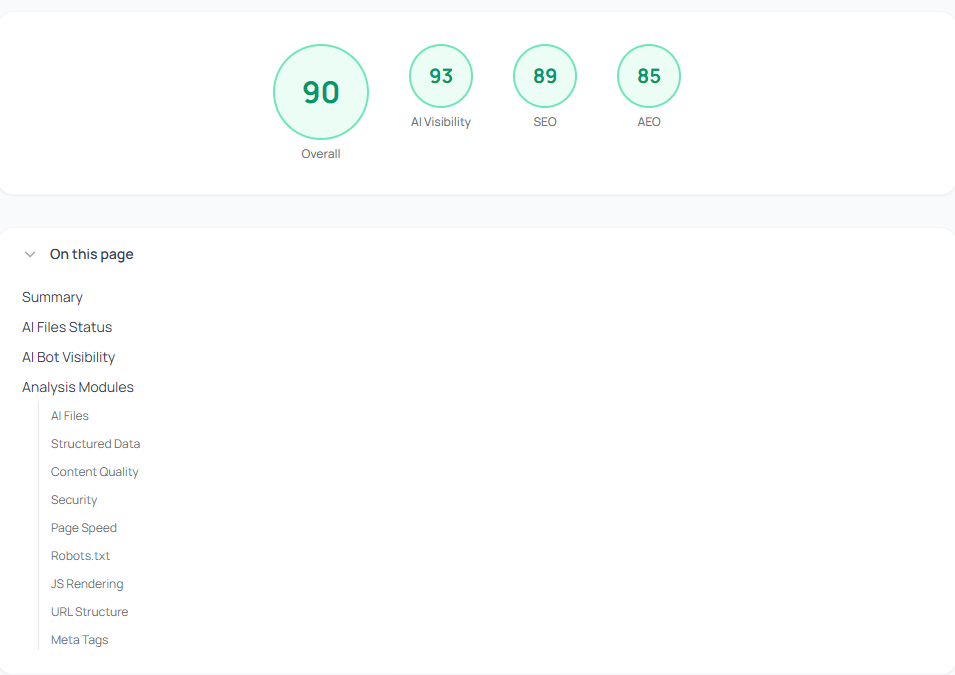
This is where visibility monitoring becomes important. You might rank #1 on Google Maps but get completely overlooked by ChatGPT because your website content isn't structured in a way AI models can easily parse. Tools like RepuAI's free AI visibility checker let you see how your brand currently appears across AI search engines, so you know where you stand before you start optimizing.
If you want to go a step further, creating an llms.txt file tells AI crawlers exactly what your business is about in a format they prefer. RepuAI has a free llms.txt generator that builds one for your site in seconds.
Best Local SEO Tools Worth Your Time
You don't need to spend thousands on tools, but the right ones save hours. Here's a no-nonsense list:
| Tool | Best For | Price |
|---|---|---|
| Google Business Profile | Your core local listing | Free |
| Google Search Console | Tracking local keyword performance | Free |
| BrightLocal | Citation audits, review monitoring, rank tracking | From $39/mo |
| Moz Local | Automated NAP distribution and sync | From $14/mo |
| Whitespark | Local citation building and GMB audit | From $17/mo |
| RepuAI | AI search visibility monitoring | Free checker available |
| Screaming Frog | Schema validation, site audits | Free up to 500 URLs |
Don't fall into the trap of buying five tools and using none of them well. Pick one for citation management, one for rank tracking, and one for reviews. Master those before adding more.
Common Local SEO Mistakes (and How to Avoid Them)
Keyword stuffing your business name on GBP. If your legal business name is "Joe's Plumbing" and you list it as "Joe's Plumbing - Best Emergency Plumber in Dallas TX 24/7," Google will flag or suspend your profile.
Ignoring mobile. 61% of local searches happen on mobile devices. If your site takes more than three seconds to load on a phone, you're losing customers to the competitor who loads in two.
Treating reviews as optional. A business with 200 reviews and a 4.3 average will almost always outrank a business with 12 reviews and a 4.9 average. Volume and recency matter more than perfection.
Creating thin location pages. Duplicating the same content across ten city pages with only the city name swapped out doesn't work anymore. Each page needs genuinely unique, useful content.
Forgetting about voice search. "Hey Siri, find a vet near me" uses the same local signals as typed searches, but tends to favor featured snippets and direct answers. Make sure your content answers common questions concisely.
The Bottom Line
Local SEO isn't a mystery. It's a system. Claim your Google Business Profile, nail your NAP consistency, earn reviews consistently, publish local content, and add proper schema markup. Do these things better than your local competitors, and you'll rank.
The game is shifting, though. AI search engines are becoming a real channel for local discovery, and most businesses haven't even thought about how they appear in AI-generated recommendations. Getting ahead of that curve now, while your competitors are still focused solely on traditional search, is one of the smartest moves you can make.
Start with the basics: check how your site currently shows up in AI search and work through the checklist above. In 30 days, you'll have a local SEO foundation that most businesses in your area simply don't have.