ChatGPT Now Shows Ads: What This Means for Your Brand Visibility
ChatGPT launched ads in February 2026. Learn how paid placements affect organic AI visibility and what your brand should do to stay visible in AI search
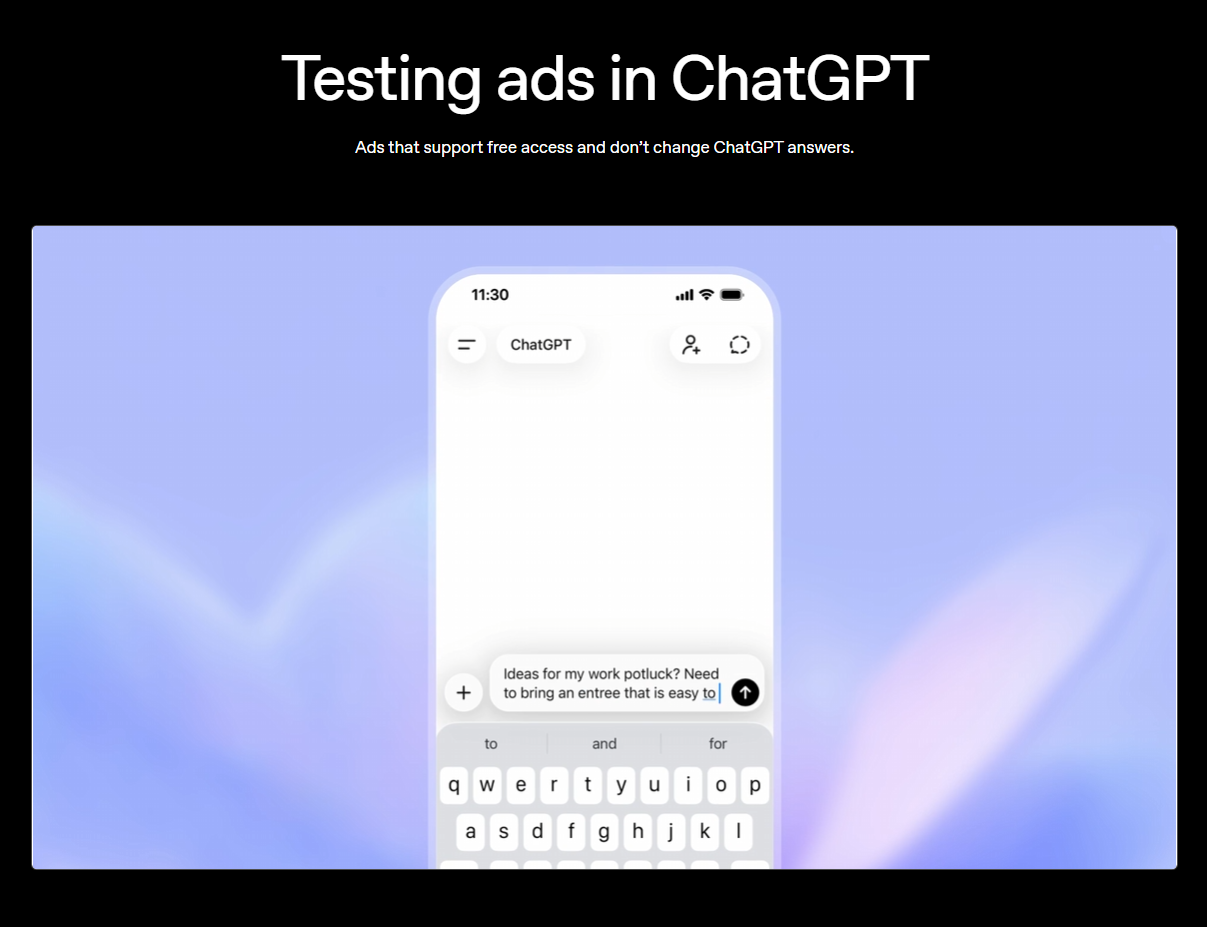
On February 9, 2026, OpenAI flipped a switch that every marketer should care about: ChatGPT started showing ads. Sponsored placements now appear below AI-generated responses for hundreds of millions of users on the Free and Go tiers. The immediate question isn't whether to buy those ads. It's whether your brand can still be found without them.
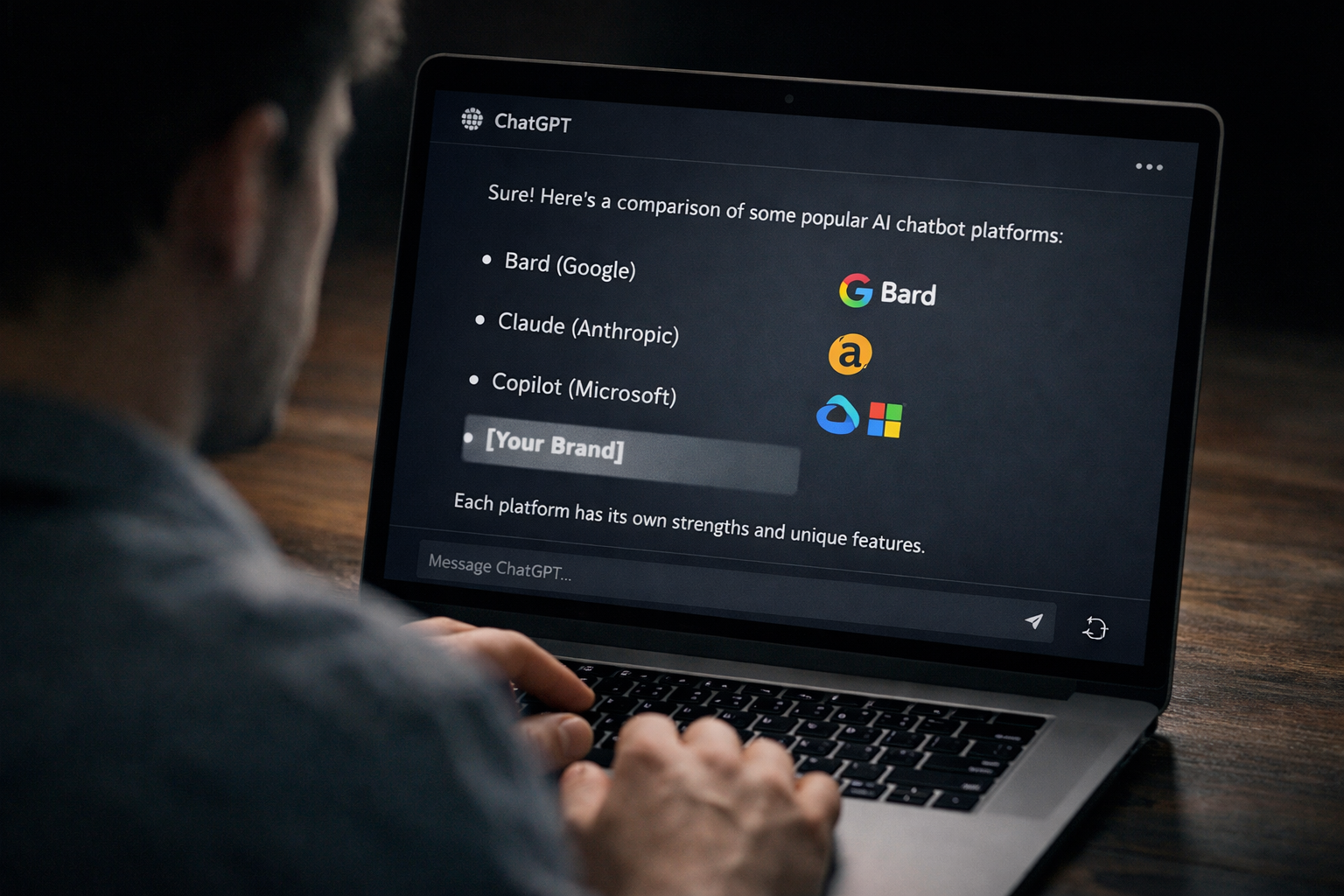
What Changed and How ChatGPT Ads Actually Work
ChatGPT ads don't appear inside the AI's answer. They show up in separate, labeled sections below or adjacent to the response. OpenAI calls this "Answer Independence," meaning advertisers can't pay to influence what ChatGPT actually says. The AI generates its response first. Then a separate ad-serving system decides whether a relevant sponsored placement should appear.
Two ad formats are live so far. The first is a contextual card: a brand name, short description, and a link that matches the conversation topic. The second is a product carousel, showing images, prices, and checkout options for purchase-intent queries. Both formats carry a visible "Sponsored" label.
Here's who sees ads and who doesn't. Users on the Free tier and the Go plan ($8/month) see sponsored content. Anyone paying for Plus, Pro, Business, Enterprise, or Education subscriptions remains ad-free. This creates a split audience where the vast majority of ChatGPT's 800+ million weekly users will encounter ads, since roughly 95% use the free tier.
The pricing tells its own story. OpenAI charges around $60 per thousand impressions with a minimum commitment of $200,000. That's roughly three times what Meta charges and comparable to live NFL broadcasts. Measurement is limited to views and click-through rates. There's no conversion tracking, no pixel data, and no retargeting. For now, this is an enterprise-only play.
Why Organic AI Visibility Just Became More Valuable
Here's the part most coverage misses. The arrival of ads doesn't diminish the value of appearing organically in ChatGPT's answers. It amplifies it.
Think about what happens when a user asks ChatGPT for a CRM recommendation. The AI responds with three or four options based on its training data and real-time sources. Then a sponsored card appears below. If your brand is already mentioned in the organic answer, that ad reinforces what the AI just said. If your brand only shows up in the ad and not in the answer, you're fighting against the AI's own recommendation.
One agency analysis put it bluntly: ads will predominantly appear for brands that were already mentioned in the organic response. It would be strange for ChatGPT to consider a brand relevant enough to advertise but not relevant enough to mention in its answer. This means organic visibility and paid placement aren't competing channels. They're interdependent.
The data supports this. Research tracking millions of website visits found that traffic arriving from AI platforms converts at roughly five times the rate of standard Google organic traffic. Users coming through AI citations have already done their research inside the conversation. They arrive at your site pre-qualified and ready to act.
The Trust Question That Won't Go Away
Not everyone is convinced this was the right move. Anthropic, the company behind Claude, ran a Super Bowl campaign in early February with the tagline: "Ads are coming to AI. But not to Claude." The ad depicted fictional chatbots interrupting personal conversations with sponsored content, drawing a sharp contrast.
Google also took a different path. At Davos in January 2026, the company confirmed that Gemini would stay ad-free. When the world's largest advertising company keeps ads out of its AI product, that's a positioning statement worth noting.
The concern is straightforward. When ads sit next to recommendations, users start wondering whether money is shaping the advice they're getting. OpenAI insists that isn't happening. But perception matters more than architecture. The first brand scandal, real or imagined, could shift user trust across the entire AI search category.
For brands, this creates a strategic fork. You can't control whether users trust ChatGPT's ad-supported model. But you can control whether your brand appears in the organic answer, which carries more credibility than any sponsored placement.
What This Means for Different Businesses
The impact of ChatGPT ads depends entirely on your budget and your current AI visibility.
Enterprise brands with large budgets can test paid placements now. But the smart ones will invest in organic AI visibility first and use ads to amplify what the AI already says about them. Running ads without organic presence is like buying a billboard next to a store that doesn't carry your product.
Mid-market and growth-stage companies should skip the $200,000 ad commitment for now. The far better investment is building the kind of content and brand signals that make ChatGPT mention you organically. This is where generative engine optimization (GEO) creates a real competitive advantage.
Small businesses and startups are actually in a strong position. They can't outspend incumbents on ChatGPT ads, but they can outproduce them on specific, authoritative content. AI systems reward expertise and specificity over brand size. A focused startup with deep content on a narrow topic can outperform a Fortune 500 brand that spreads its content thin.
A Practical Checklist: Protecting Your Organic AI Visibility
Instead of chasing ad placements, focus on the things that determine whether AI systems mention your brand at all. Here's a checklist you can act on this week.
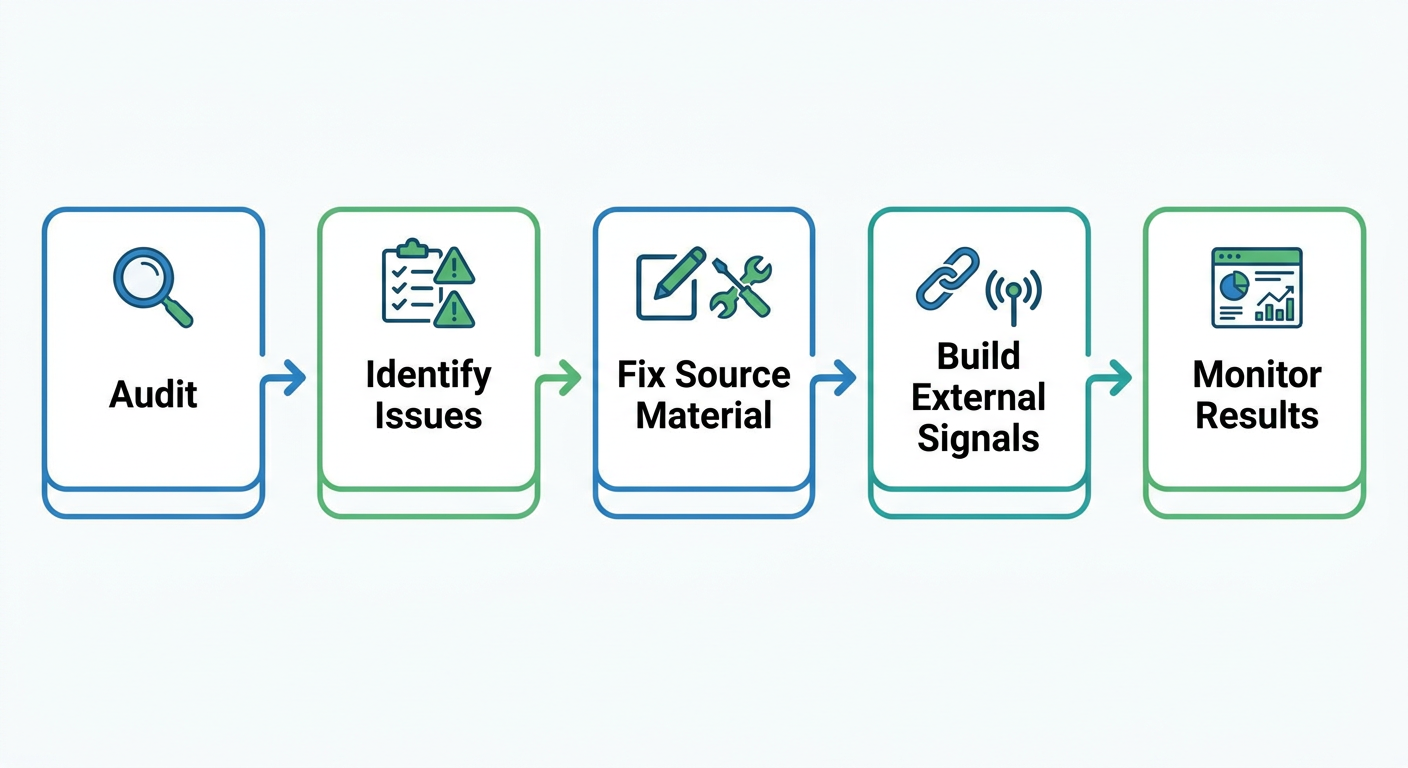
1. Audit how ChatGPT currently describes your brand. Ask ChatGPT direct questions about your product category, your competitors, and your brand by name. Record what it says. Note inaccuracies, missing information, and competitor mentions. This is your baseline. Tools like RepuAI's AI Visibility Checker can automate this across multiple AI engines at once.
2. Publish content that answers high-intent questions in your category. AI systems cite structured, specific content. Write guides that directly answer questions like "best [your category] for [specific use case]." Include original data, clear comparisons, and updated information. This is the type of content that earns AI citations.
3. Make your site AI-readable. Create an llms.txt file that tells AI crawlers which pages matter most. Implement schema markup. Make sure your product pages, pricing, and key differentiators are easy for machines to parse.
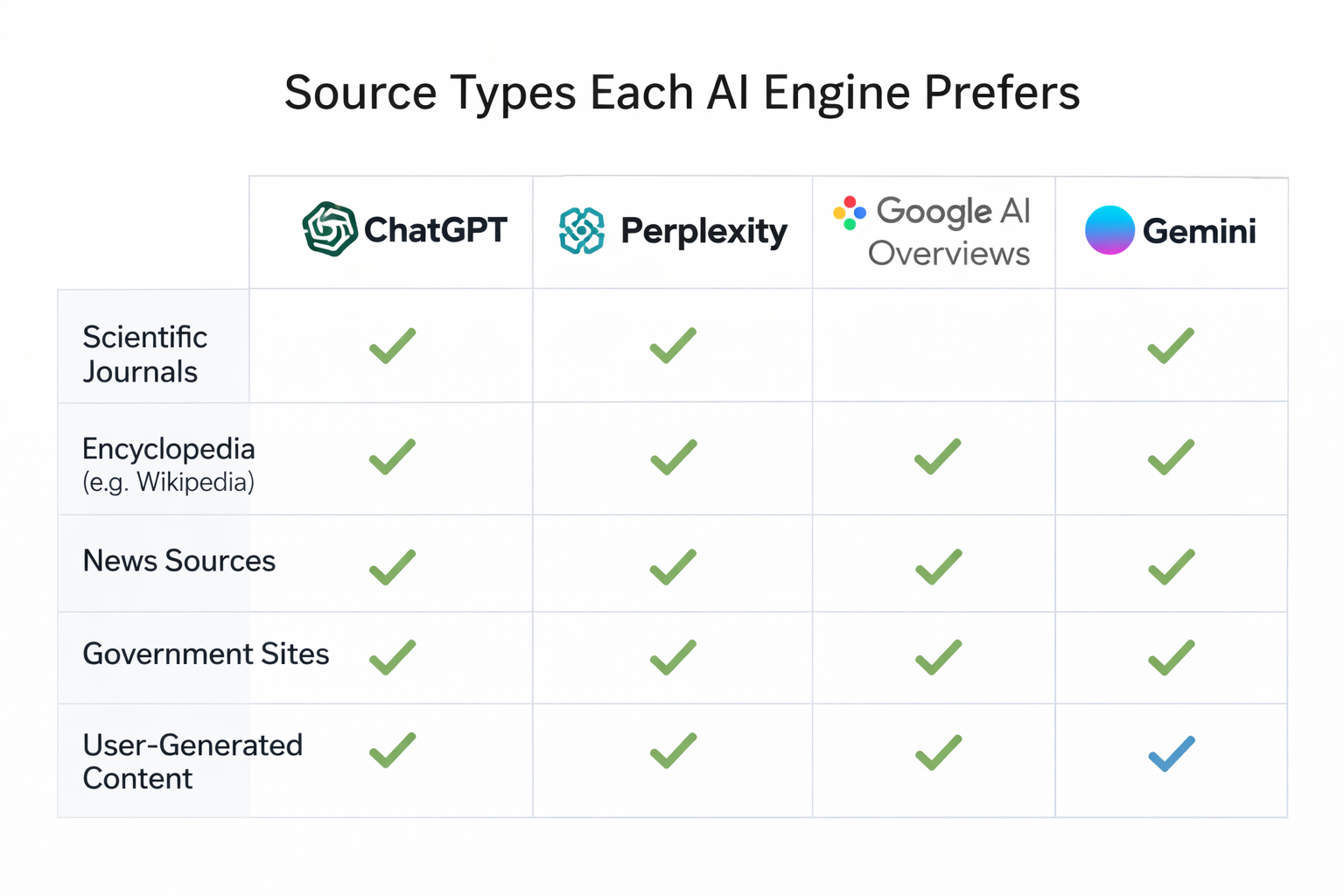
4. Build brand authority across multiple sources. AI models synthesize information from across the web. Third-party reviews, press coverage, expert mentions on LinkedIn, and discussions on Reddit all contribute to how AI systems perceive your brand. A single blog post won't move the needle. Consistent, multi-source authority will.
5. Track your AI visibility over time, not just your Google rankings. Search Console can't tell you how often ChatGPT mentions your brand. You need tools built for AI search monitoring. RepuAI tracks brand mentions, sentiment, and citation patterns across ChatGPT, Perplexity, Gemini, Claude, and other AI engines, giving you a dashboard that shows what Google Analytics can't.
6. Monitor how your competitors appear in AI responses. Your competitor might already be the first brand ChatGPT recommends in your category. If you don't know that, you can't respond to it. Build a competitor tracking framework that covers AI search, not just traditional SERPs.
The Bigger Picture: What Comes Next
ChatGPT ads are just the beginning. OpenAI's roadmap includes broader rollout to English-speaking markets through mid-2026, sidebar sponsored content and affiliate features in Q4 2026, and a self-serve advertising platform in 2027. When that self-serve option arrives, the cost of entry drops and competition for attention inside ChatGPT intensifies.
This follows a pattern we've seen before. Google started with ten blue links. Then ads crept in. Then featured snippets. Then AI Overviews. Each layer pushed organic results further down the page. The brands that maintained visibility were the ones who invested early in earning their position rather than renting it.
The same dynamic is forming in AI search. The brands building organic AI authority now are establishing positions that will become harder to earn and more expensive to buy as ads scale. The window for earning organic dominance in AI responses is open, but it won't stay open forever.
Ads Don't Replace Authority
ChatGPT showing ads changes the economics of AI search, but it doesn't change the fundamentals. The brands that AI systems trust, cite, and recommend earn that position through content quality, domain credibility, and consistent brand signals. Ads can amplify that position. They can't create it.
The most dangerous response to ChatGPT ads is passivity: assuming this doesn't affect you because you don't plan to advertise. It affects every brand that depends on being found when customers ask AI for advice. The question isn't whether you'll buy ChatGPT ads. The question is whether your brand will be in the answer at all.
Start by understanding where you stand. Check your AI visibility score, audit your brand's presence across AI engines, and build the organic authority that no ad budget can replace.