Leveraging AI-Powered Content Hubs for Better GEO in 2026
Discover how AI content hubs enhance GEO in 2026 with improved visibility and relevance for AI search engines.

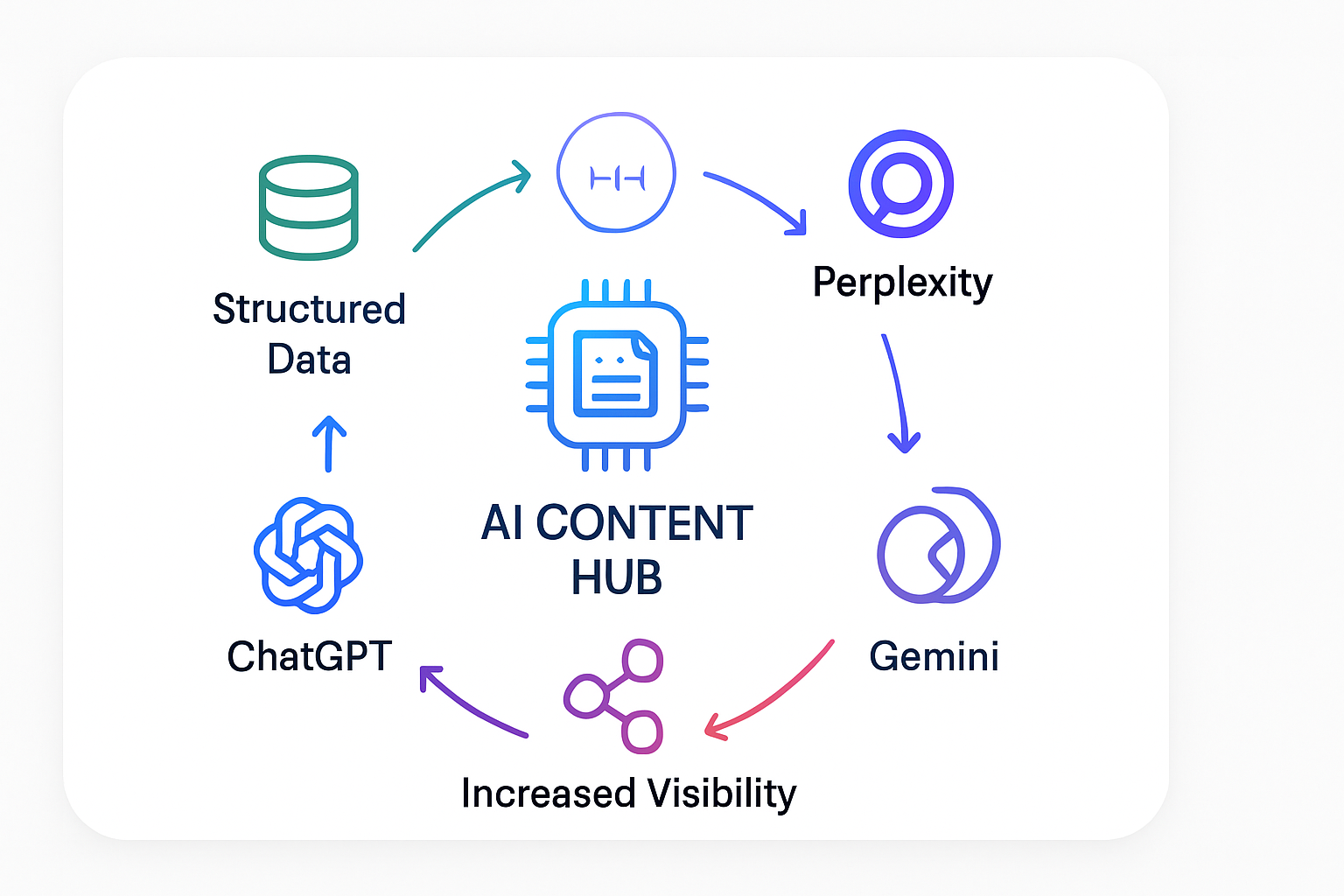
AI-powered content hubs are pivotal for enhancing Generative Engine Optimization (GEO) in 2026. They structure content to meet the demands of AI search engines like ChatGPT, Perplexity, and Gemini, ensuring improved visibility and relevance. Learn how to set up these hubs, leverage them effectively, and see real-world examples of brands that have successfully implemented this strategy.
How AI-Powered Content Hubs Enhance GEO
Introduction to AI Content Hubs
AI content hubs centralize structured, high-quality content optimized for AI-driven search engines. These hubs facilitate the retrieval and generation of relevant information by AI systems, thus improving your brand's GEO. In 2026, creating content hubs is crucial as they cater to AI's preference for organized and easily parseable data.
Why GEO Matters in 2026
Generative Engine Optimization focuses on making content discoverable by AI engines, which are now responsible for over 40% of all online searches. With the rise of AI search engines like ChatGPT and Gemini, traditional SEO is no longer sufficient. GEO ensures your brand's information is generated and cited accurately, which is vital given that 15% of queries bypass Google. Learn more about the impact of these changes in AI Search vs Google: What Marketers Need to Know in 2026.
Understanding AI Content Hubs
Definition and Components
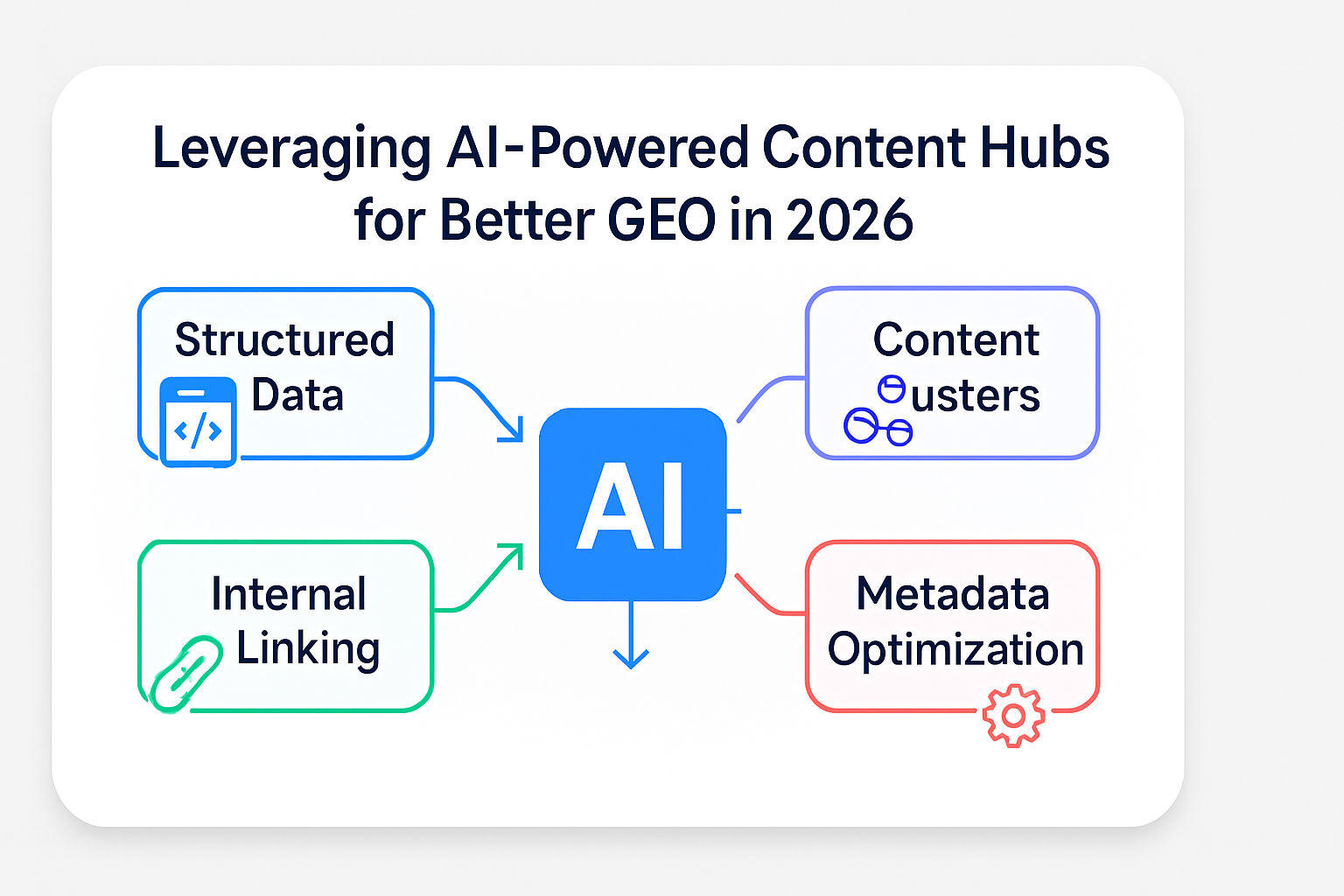
An AI content hub is a centralized repository of information designed to be easily accessible and understandable by AI algorithms. Key components include:
- Structured Data: Utilizes schema markup to enhance AI visibility.
- Content Clusters: Groups content by themes or topics.
- Internal Linking: Connects related content to improve navigation.
- Metadata Optimization: Ensures the correct use of tags and descriptions.
Examples of Successful Hubs
Successful AI content hubs include those by tech giants and e-commerce platforms. For instance, a major tech company increased its AI visibility by 30% by structuring its knowledge base into a comprehensive hub. Similarly, an e-commerce site saw a 25% boost in AI-driven traffic by organizing product information and FAQs into structured content clusters.
Setting Up an AI Content Hub for GEO
Choosing the Right AI Tools
Selecting appropriate AI tools is critical. These should include tools for content generation, schema markup, and analytics. Consider tools that support llms.txt to enhance visibility, as discussed in What Is LLMs.txt and How It Helps Your Website Be AI-Friendly.
Integrating with Current Systems
Integration involves aligning your current CMS with AI content hub requirements. Ensure your system supports structured data and allows for easy updates. Use plugins or APIs that facilitate seamless data flow and connectivity between your content hub and AI engines.
Best Practices for Managing AI Content Hubs
Content Strategy Tips
- Focus on Quality: High-quality, well-researched content is essential.
- Update Regularly: Keep content fresh to maintain relevance.
- Diversify Formats: Include text, video, and interactive elements.
- Use Data-Driven Insights: Leverage analytics to guide content strategy.
Monitoring and Optimization
- Track AI Visibility: Use tools to monitor how often your content is cited.
- Adjust Based on Feedback: Use AI-driven insights to refine content.
- Optimize Continuously: Regularly update metadata and structured data.
Checklist: Implementing AI Content Hubs Effectively
Essential Steps
- Define Goals: Set clear objectives for your content hub.
- Organize Content: Group content into logical clusters.
- Implement Schema Markup: Use structured data to enhance visibility.
- Integrate Tools: Ensure compatibility with existing systems.
- Monitor Performance: Continuously track and adjust strategies.
Common Pitfalls to Avoid
- Ignoring Updates: Failing to update content regularly can hinder performance.
- Overcomplicating Structure: Keep the structure simple for ease of navigation.
- Neglecting Metadata: Incomplete or incorrect metadata affects visibility.
Case Studies: Brands Succeeding with AI Content Hubs
Case Study 1
A global e-commerce brand restructured its product catalog into an AI content hub. This led to a 40% increase in AI-driven traffic, with AI engines frequently citing the brand in response to product queries.
Case Study 2
A healthcare provider created a patient information hub optimized for AI search. This initiative resulted in a 35% rise in new patient inquiries sourced from AI engines like ChatGPT and Perplexity.
FAQ
Common Questions About AI Content Hubs?
What is the main benefit of an AI content hub? AI content hubs improve your brand's visibility in AI-driven searches by organizing content in a way that AI engines can easily process and cite.
Troubleshooting?
Why isn't my content appearing in AI search results? Ensure your content uses structured data and is regularly updated. Check compatibility with AI engines by using tools like the AI Visibility Checker.
Conclusion
AI-powered content hubs are essential for enhancing GEO in 2026. By structuring your content effectively, you can improve your brand's visibility across AI search platforms. Start by checking your current AI visibility with our AI Visibility Checker and consider setting up a structured hub to stay ahead in the AI-driven world of search.