AI Search vs Google: What Marketers Need to Know in 2026
Traditional Google SEO is losing ground to AI search engines like ChatGPT, Perplexity, and Gemini. Discover how search behavior is shifting in 2026, why 15% of queries now bypass Google, and what marketers must do to stay visible where customers actually search.
The Shift to AI Search: Why Marketers Need to Optimize Now
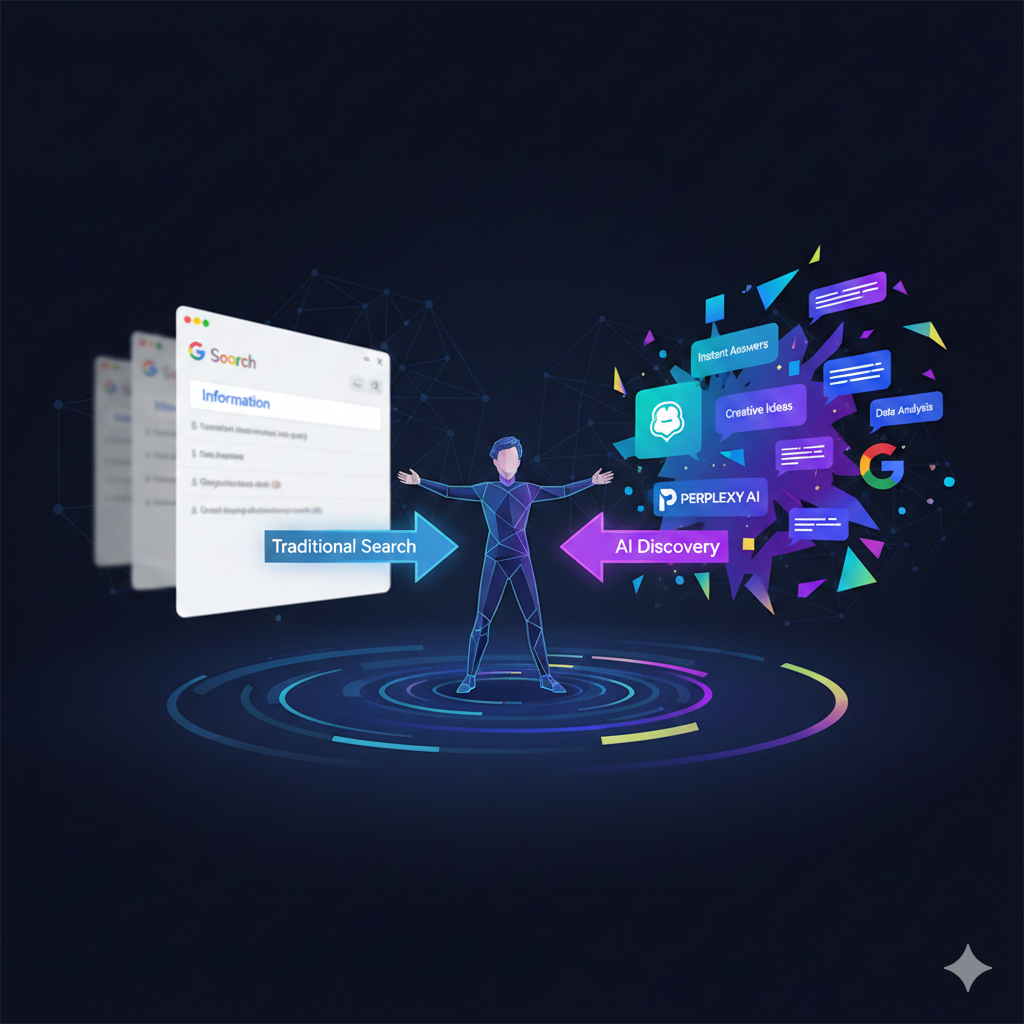
The search landscape has fundamentally changed. While marketers pour resources into Google rankings, a quiet revolution is happening. ChatGPT, Perplexity, Gemini, and other AI search engines now handle over 15% of all search queries, and that number doubles every six months. Your customers are asking AI assistants for recommendations, and if your brand isn't optimized for these platforms, you're invisible to a rapidly growing segment of your market.
This isn't about replacing your Google strategy. It's about recognizing that search behavior has fractured across multiple channels, each with different rules, algorithms, and ranking factors. The marketers who understand this shift now will dominate their categories. Those who wait will spend years playing catch-up.
Context
How Search Behavior Changed in 2026 The numbers tell a clear story. According to recent industry data, AI-powered search platforms now process 2.5 billion queries daily, growing at 150% year-over-year. Users aren't just experimenting with these tools. They're integrating them into their daily workflow for research, purchasing decisions, and professional tasks.
The shift is especially pronounced in B2B markets. Decision-makers use ChatGPT to create vendor shortlists, ask Perplexity for competitive comparisons, and consult Claude for technical evaluations. They're doing this before they ever visit your website or see your Google ads.
What makes this particularly challenging for marketers is the invisible nature of AI search. When someone searches on Google, you can track impressions, clicks, and conversions. When someone asks ChatGPT "what are the best CRM tools for small businesses," you have no idea if your brand was mentioned, how it was described, or whether you lost a potential customer.
The Psychology Behind AI Search Adoption
Users prefer AI search for specific reasons that traditional search engines can't match. AI provides direct answers instead of a list of links. It offers personalized recommendations based on context. It can compare options, explain trade-offs, and answer follow-up questions in natural language.
For complex B2B purchases, this conversational approach reduces research time from hours to minutes. Instead of opening 15 browser tabs and synthesizing information across multiple sources, buyers get curated answers that feel like consulting with an expert colleague.
Key Differences Between Google SEO and AI Search Optimization
Traditional SEO focused on ranking for specific keywords on search engine results pages. AI search optimization is fundamentally different because there are no "results pages" to rank on. AI systems synthesize information from multiple sources and present a single, coherent response.
Ranking Factors That Changed
Google's algorithm prioritized backlinks, domain authority, keyword optimization, and technical SEO factors. AI search engines evaluate sources differently. They look for authoritative, up-to-date information with strong expertise signals. They favor content that demonstrates real-world experience and practical value.
The E-E-A-T framework (Experience, Expertise, Authoritativeness, Trustworthiness) matters more than ever, but it's evaluated through a different lens. AI systems analyze the substance of your content, not just the SEO signals around it.
Structured data becomes critical. AI models parse schema markup, API documentation, and machine-readable formats more effectively than they parse marketing copy. If your product information isn't structured properly, AI assistants might ignore it entirely.
Content That AI Systems Value
AI search engines don't just look at what you say. They look at how authoritative sources describe you. This means your presence in industry publications, review sites, comparison platforms, and knowledge bases matters enormously.
Recency plays a bigger role. AI models often prioritize recent information over older content, even if the older content ranks higher on Google. A blog post from 2024 might outperform a comprehensive guide from 2022 in AI responses.
Specificity wins over breadth. Detailed case studies, technical specifications, and data-driven insights get cited more frequently than general overview content. AI systems are good at finding precise answers to specific questions.
Why Traditional SEO Metrics Don't Translate
Most marketing teams measure SEO success through organic traffic, keyword rankings, and conversion rates. These metrics become less meaningful when 15-20% of your potential audience never clicks through from a search results page.
The Visibility Gap
You might rank number one on Google for "marketing automation software" but never appear when someone asks ChatGPT for recommendations in that category. This creates a visibility gap that traditional analytics tools can't detect.
Brand24, SEMrush, and Ahrefs excel at tracking web mentions and Google performance. None of them tell you how AI systems represent your brand. You could have perfect Google SEO and be completely invisible in AI search results.
The inverse is also true. Brands with mediocre Google rankings sometimes dominate AI recommendations because they have strong presence in the sources AI models trust most, like authoritative review platforms and industry publications.
New Metrics That Matter
Smart marketers are tracking entirely new KPIs. AI mention frequency measures how often your brand appears in responses to relevant queries. Sentiment score evaluates whether AI systems present your brand positively or negatively. Competitor share of voice shows your position relative to alternatives.
Context accuracy matters because AI systems sometimes present outdated information. If ChatGPT describes your product using features from 2023 while omitting your 2025 innovations, you're losing competitive advantage. Platform coverage tracks whether you appear consistently across ChatGPT, Perplexity, Gemini, and other AI tools.
These metrics require different measurement approaches. Some companies manually test queries and track responses. Others use specialized tools designed specifically for AI search monitoring.
What AI Search Means for Different Marketing Channels
The rise of AI search creates ripple effects across your entire marketing strategy. Content marketing, paid advertising, and brand positioning all need adjustment.
Content Strategy Implications
Long-form SEO content designed to rank for dozens of related keywords becomes less valuable. AI systems extract the specific information they need and ignore the rest. This doesn't mean content length doesn't matter, but it changes what makes content valuable.
Focus shifts toward creating definitive, authoritative resources that AI systems want to cite. Think comprehensive product documentation, detailed comparison guides, original research, and expert analysis. Thin content stuffed with keywords gets ignored.
Your knowledge base and support documentation become marketing assets. AI assistants frequently cite help centers and technical docs when answering product questions. If this content is sparse, outdated, or poorly structured, AI will look elsewhere.
Paid Advertising Adjustments
Google Ads and social media advertising still work, but the funnel has changed. Many buyers now use AI search for initial research, then move to traditional channels for final evaluation. This means your paid campaigns might be capturing demand that was shaped by AI recommendations you're not aware of.
Some forward-thinking brands are experimenting with AI-native advertising approaches. They ensure their brand appears in AI training data sources, sponsor authoritative industry content, and optimize their digital footprint specifically for AI citation.
The challenge is attribution. When someone asks ChatGPT for recommendations, spends a week evaluating options, then finally clicks a Google ad, traditional analytics credits the ad for the conversion. The AI interaction that created initial awareness remains invisible.
Practical Steps to Start Optimizing for AI Search
Most marketing teams feel overwhelmed by the idea of optimizing for AI search on top of everything else they're already doing. The good news is you don't need to rebuild your entire strategy. You need to make strategic additions that protect your brand visibility as search behavior evolves.
Immediate Actions You Can Take
Start by auditing your current AI visibility. Test relevant queries on ChatGPT, Perplexity, Claude, and Gemini. Document when your brand appears, how it's described, and what competitors are mentioned. This baseline assessment reveals your current position.
Optimize your structured data. Ensure your website has comprehensive schema markup, updated API documentation, and machine-readable product information. AI systems rely heavily on structured data to understand what you offer.
Strengthen your presence in authoritative sources. Get listed in industry-specific review platforms, contribute expert commentary to publications AI systems trust, and build relationships with the knowledge bases that AI models cite frequently.
Update your content with recent information. AI systems favor recency, so refreshing important pages with 2025 and 2026 dates signals current relevance. Add recent case studies, updated statistics, and fresh examples.
Building Long-Term AI Search Strategy
Treat AI optimization as an ongoing channel, not a one-time project. Assign ownership to someone on your team. Set quarterly goals for improving AI visibility metrics. Integrate AI search considerations into your content planning process.
Consider automation tools that can scale your monitoring efforts. Manually checking AI responses works for initial assessment but becomes unsustainable as you track more queries across more platforms. Tools like RepuAI provide real-time monitoring across multiple AI search engines, alerting you to changes in how your brand is represented.
Develop content specifically designed for AI citation. Create comparison pages that objectively evaluate your product against competitors. Publish detailed specification sheets. Maintain an up-to-date press page with recent company news. These assets increase the likelihood that AI systems present accurate, current information about your brand.
Checklist
- Audit your current AI visibility across major platforms.
- Optimize structured data and schema markup.
- Strengthen presence in authoritative sources.
- Update content for recency.
- Assign team ownership for AI optimization.
- Set quarterly goals for AI metrics.
- Use tools like RepuAI for monitoring.
- Create AI-friendly content like comparisons and specs.
Common Mistakes Marketers Make
The biggest mistake is ignoring AI search entirely, assuming it's too early or too complex to matter. By the time AI search becomes obviously critical, you'll be years behind competitors who started optimizing now.
Another common error is treating AI optimization like traditional SEO. Keyword stuffing, link schemes, and other legacy tactics don't work with AI systems. In fact, they can hurt your credibility if AI models detect manipulative patterns in your content.
Some marketers focus exclusively on ChatGPT and ignore Perplexity, Claude, Gemini, and other platforms. User preferences vary by demographic and use case. B2B decision-makers often prefer Perplexity for research. Developers gravitate toward Claude for technical questions. You need presence across multiple platforms.
Finally, many teams fail to monitor what AI systems actually say about their brand. They optimize blindly, hoping for the best, without knowing whether their efforts are working. Regular monitoring is essential for understanding your current position and tracking improvement over time.
Conclusion
The Competitive Landscape Is Shifting
Early adopters are gaining substantial advantages. Companies that started optimizing for AI search in 2024 and early 2025 now dominate their categories in AI recommendations. They appear consistently when buyers ask for vendor suggestions. Their competitors remain invisible.
This creates a first-mover advantage that's difficult to overcome. AI systems develop "preferences" based on the sources they encounter repeatedly. If your brand consistently appears in authoritative contexts, AI is more likely to recommend you. If you're absent from AI training data and citation sources, you're fighting uphill to gain visibility later.
The cost of delay compounds quickly. Every month you wait, competitors build stronger AI presence. They earn more citations, appear in more AI-generated recommendations, and capture customers you never knew you were competing for.
Moving Forward
AI search isn't replacing Google. It's fragmenting the search landscape across multiple platforms with different rules, algorithms, and user behaviors. Marketers who recognize this reality and adapt their strategies accordingly will thrive. Those who cling exclusively to traditional SEO will slowly lose market share to competitors they can't even see.
The next six months are critical. AI search adoption is accelerating, but the optimization landscape is still relatively open. Brands that establish strong AI presence now will benefit for years. Those who wait will spend 2027 and beyond trying to catch up.
Start with basic visibility monitoring. Understand where you currently stand. Then implement systematic improvements to your structured data, content authority, and presence in sources AI systems trust. Track your progress with metrics designed specifically for AI search performance.
The future of search is already here. The question isn't whether to optimize for AI search engines. The question is whether you'll do it proactively while there's still time to lead your category, or reactively after you've lost ground to competitors who moved faster.